Welcome to the Heart of the Game Transfer Blueprint. Below are 42 elite-level practice plans organized in a clear, full-season progression. Each practice includes a detailed whiteboard video breakdown to support teaching, enhance clarity, and ensure seamless implementation on the ice.
Note: These plans can be used at any level that utilizes full ice. For younger age groups, more emphasis should be placed on developing the habits within each concept before expecting full execution. For more development age and skill appropriate practices please visit the Full-Ice Development Season Plans.
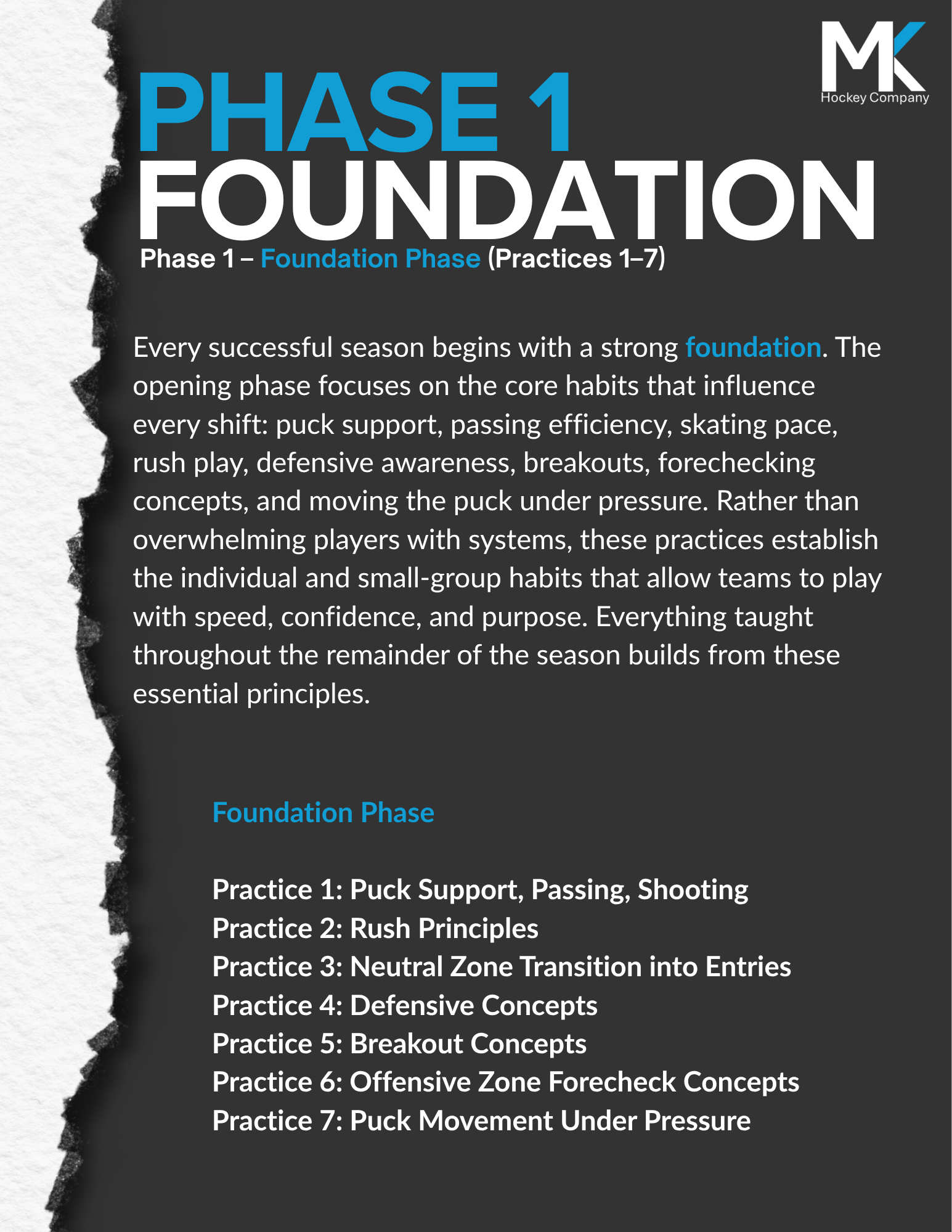
Phase 1 – Foundation Phase
(Practices 1–7)
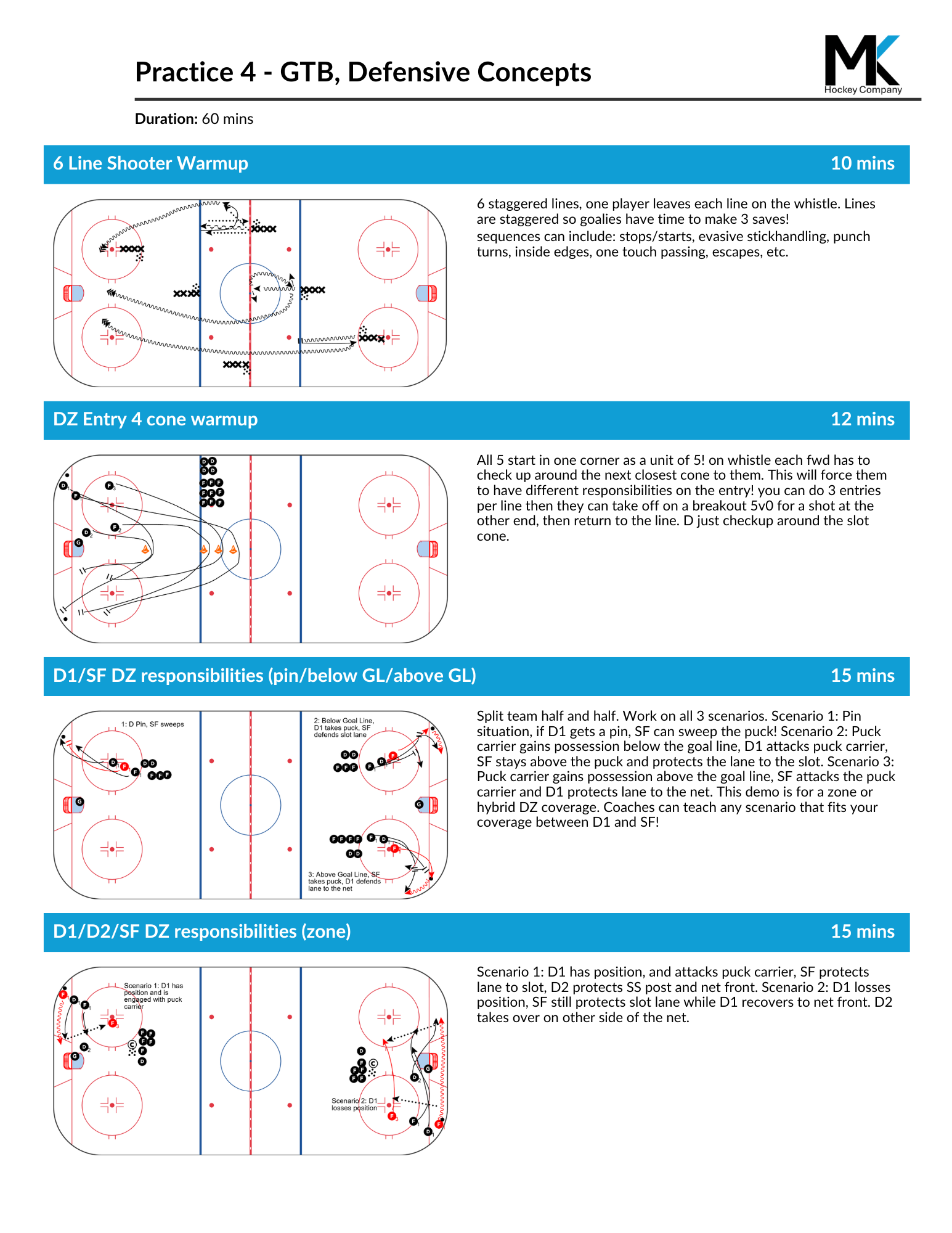
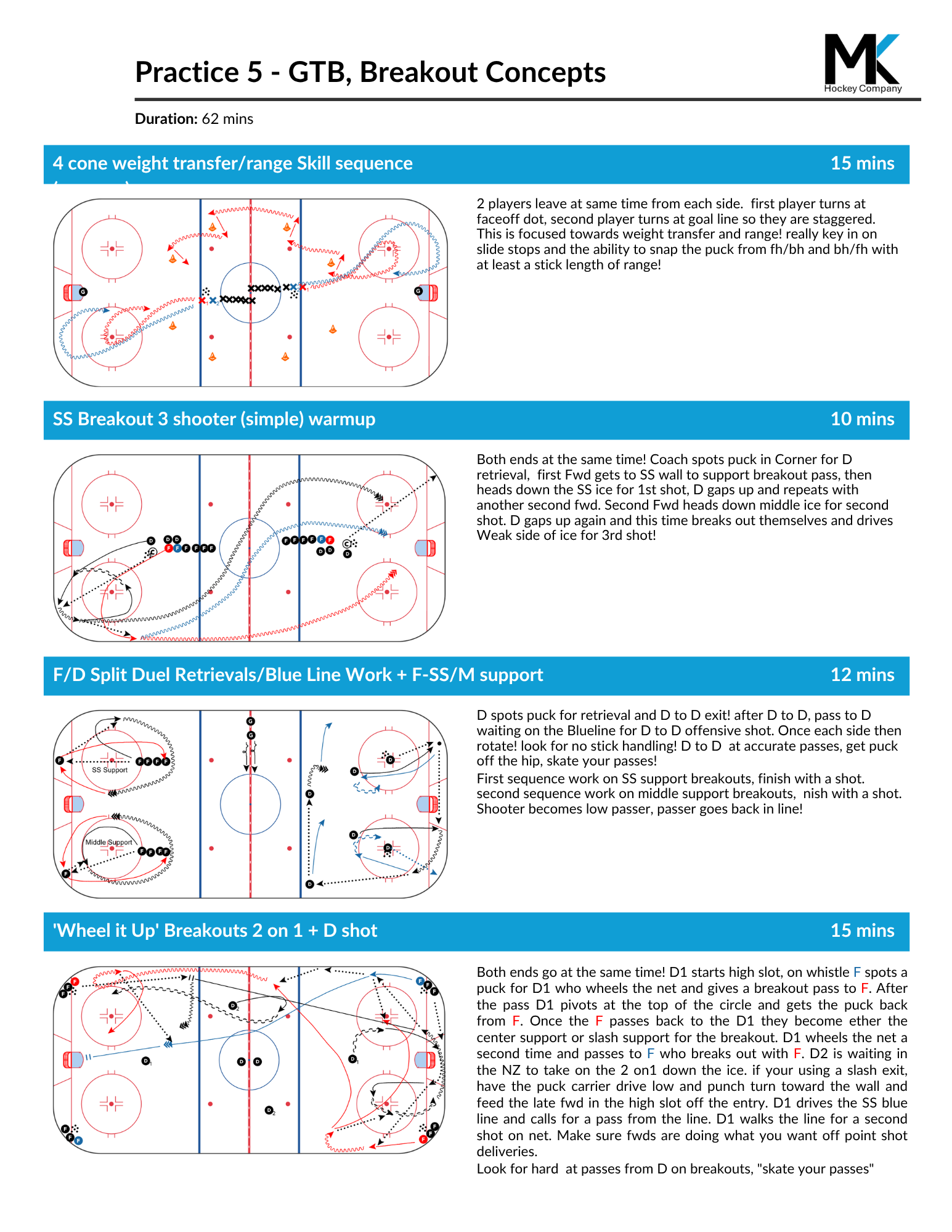
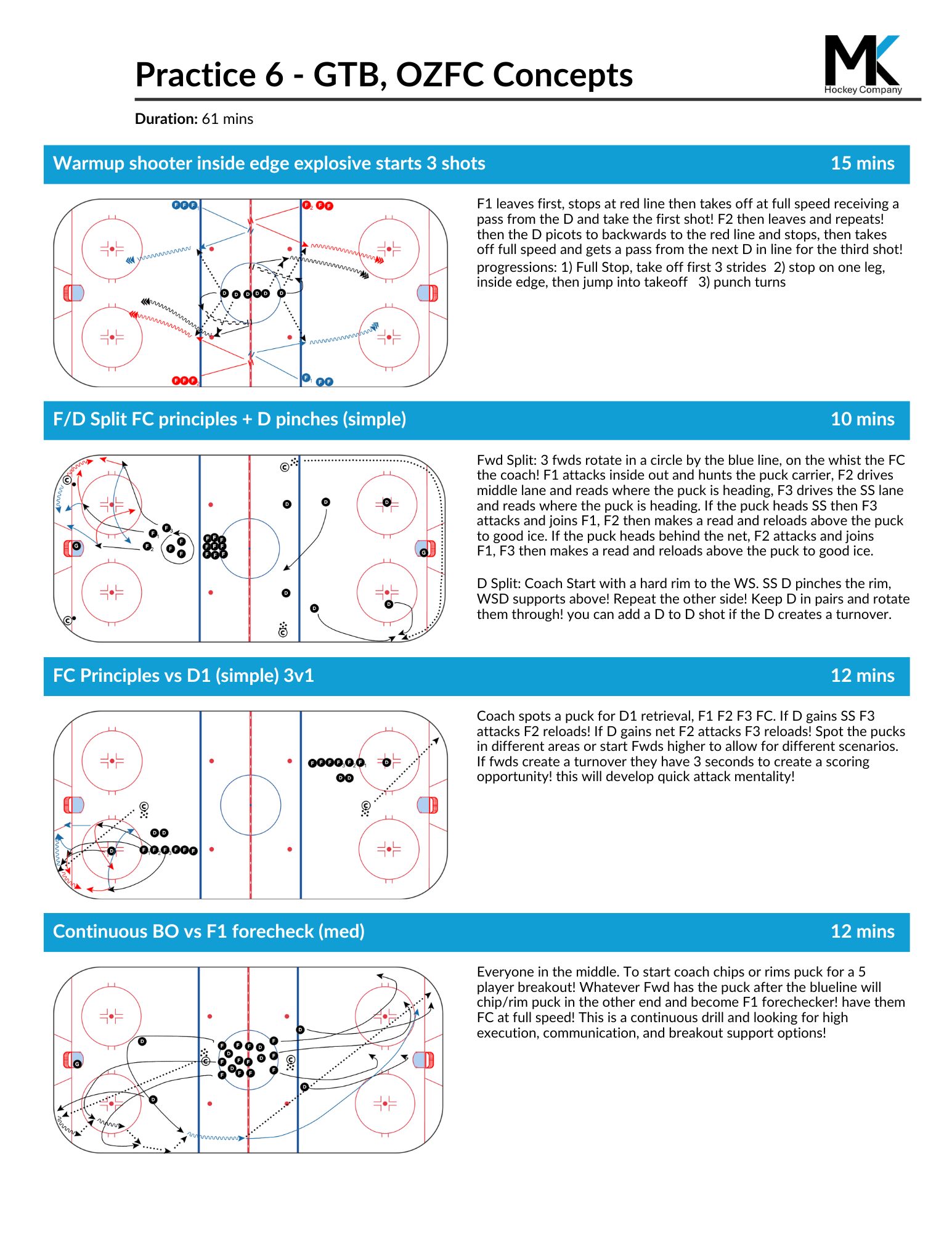
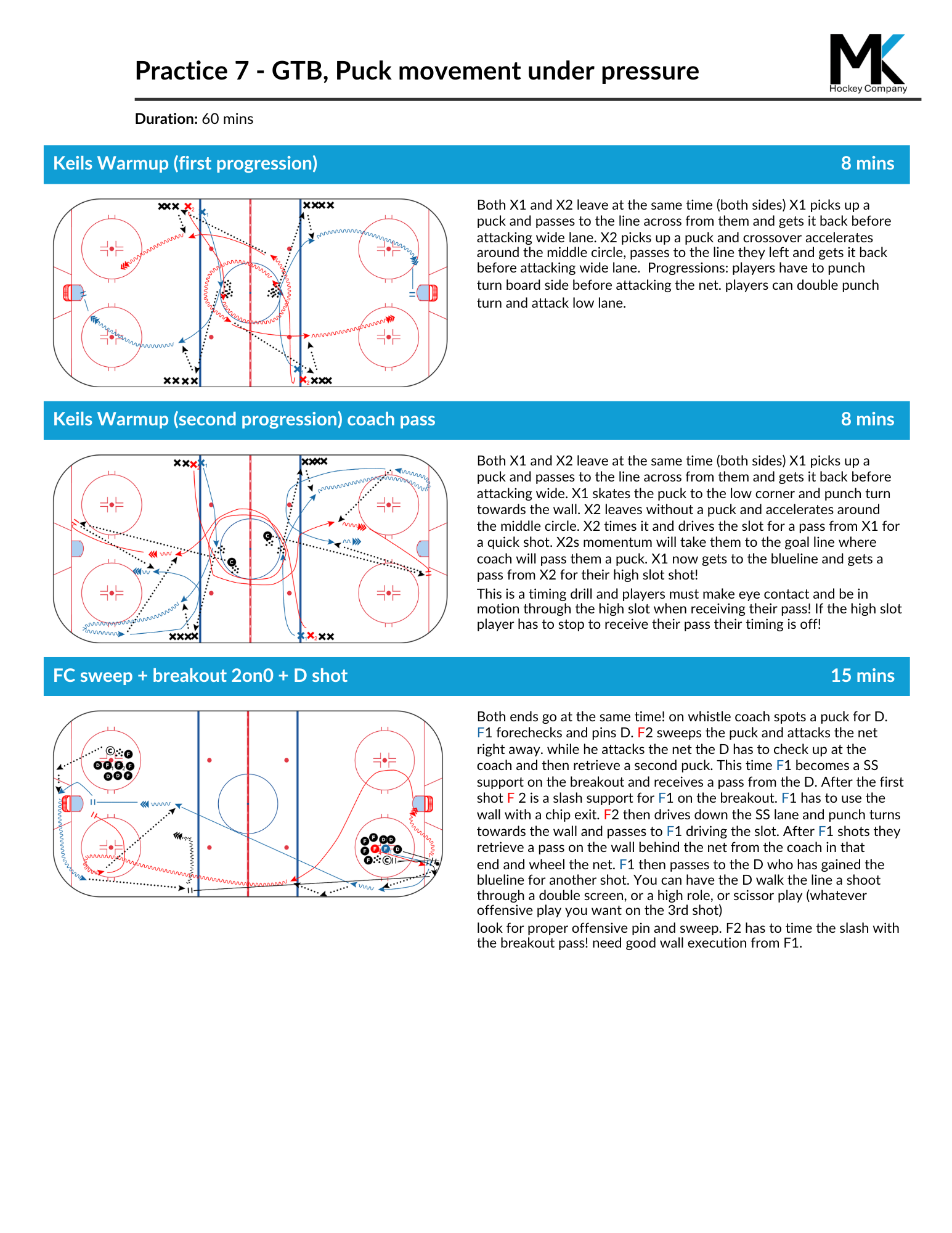
Every successful season begins with a strong foundation. The opening phase focuses on the core habits that influence every shift: puck support, passing efficiency, skating pace, rush play, defensive awareness, breakouts, forechecking concepts, and moving the puck under pressure. Rather than overwhelming players with systems, these practices establish the individual and small-group habits that allow teams to play with speed, confidence, and purpose. Everything taught throughout the remainder of the season builds from these essential principles.
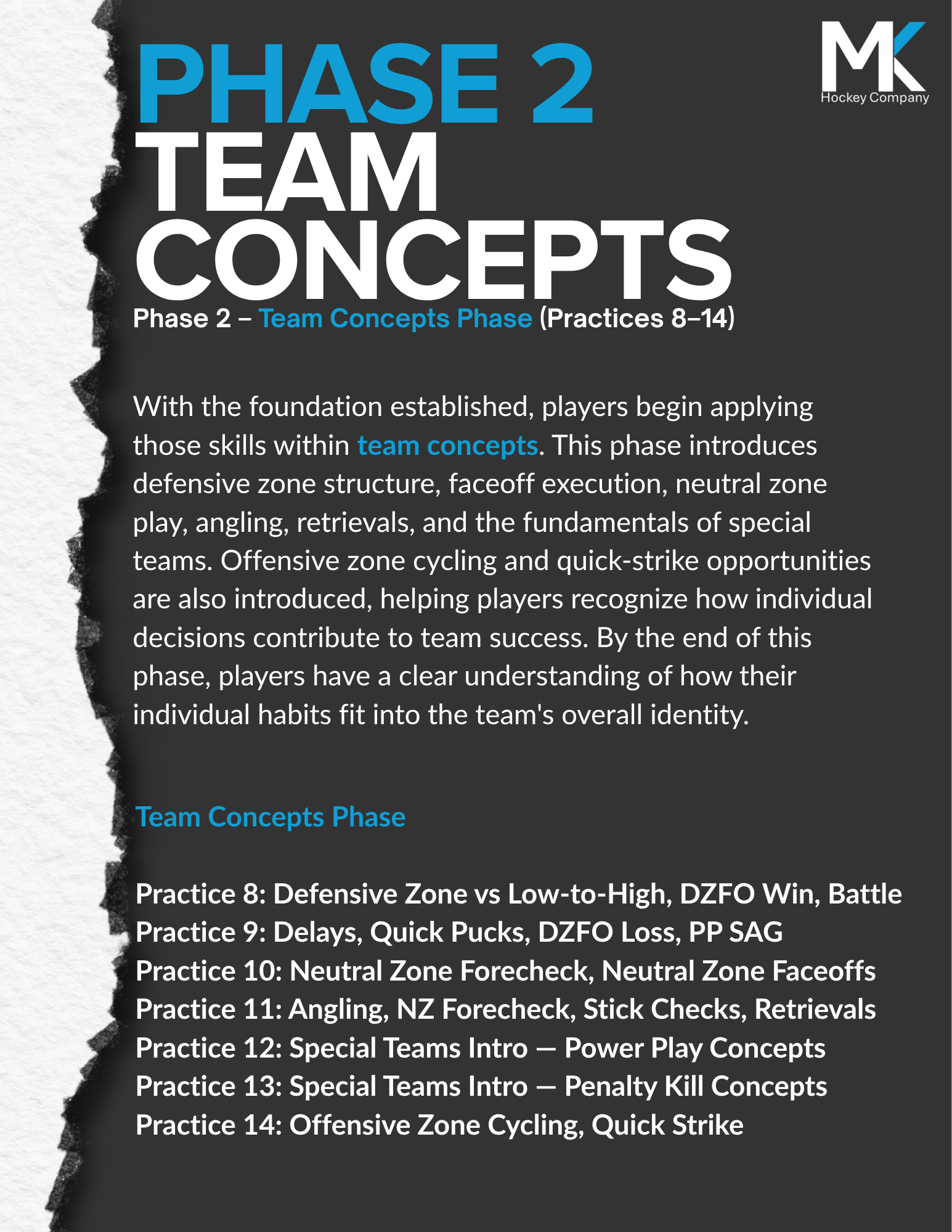
Phase 2 – Team Concepts
(Practices 8–14)
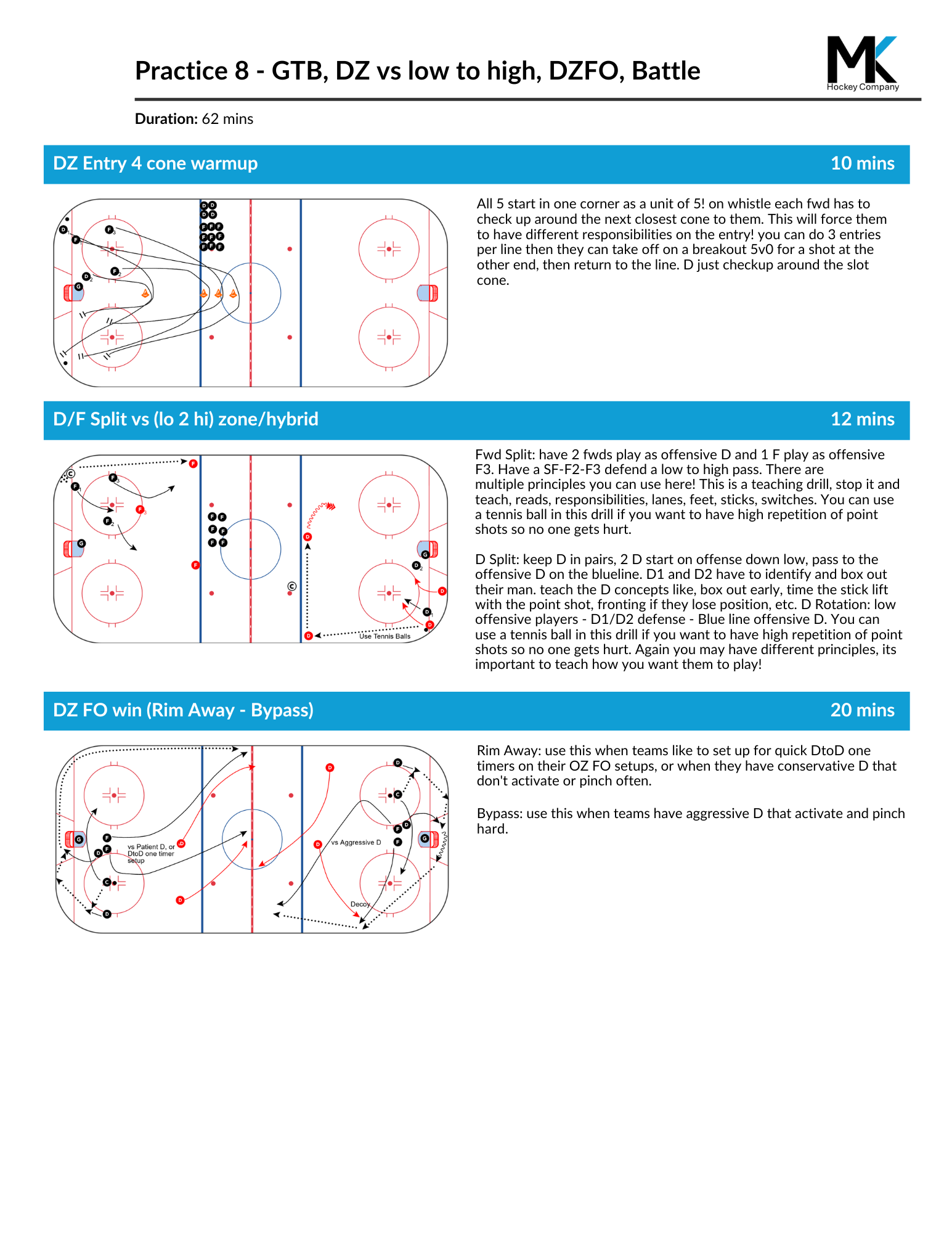
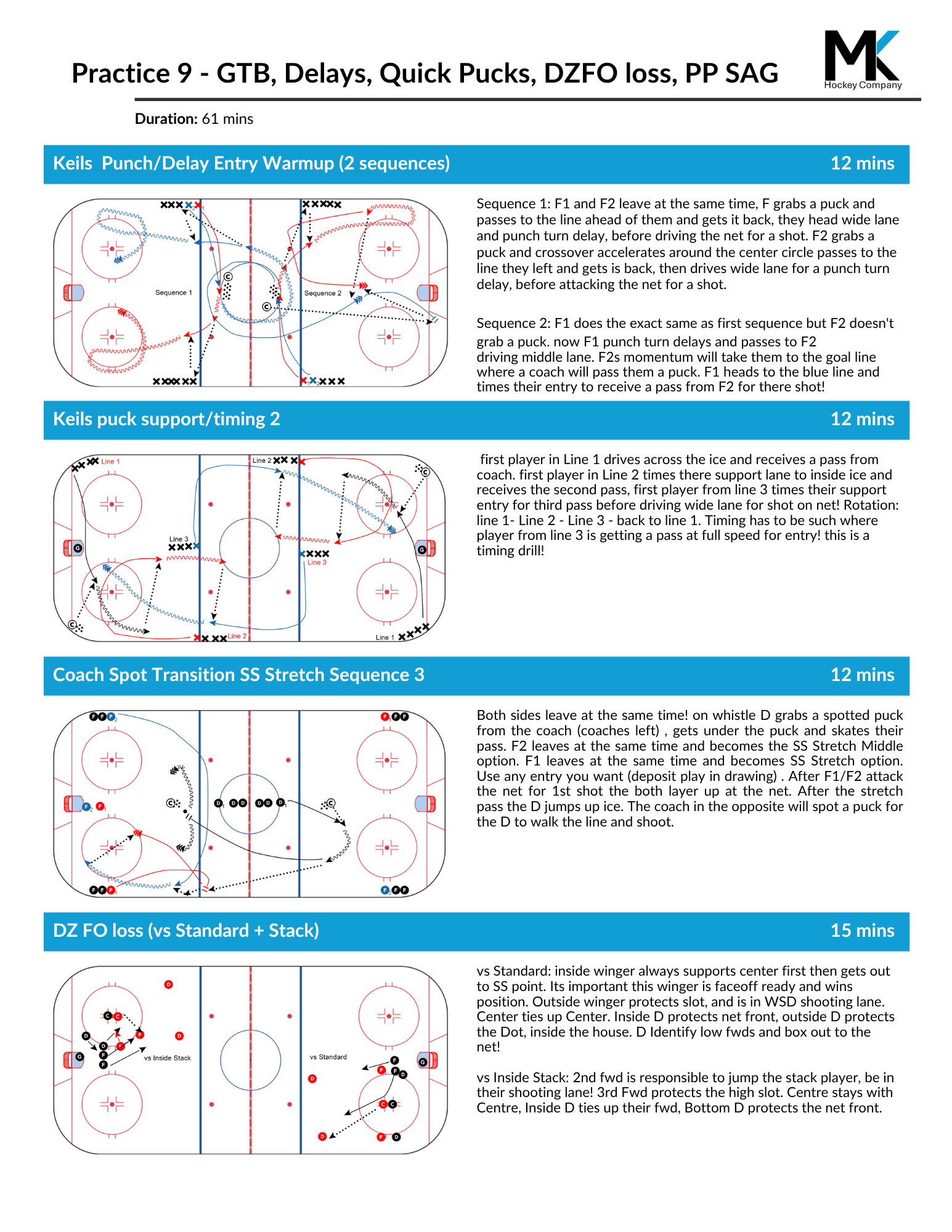
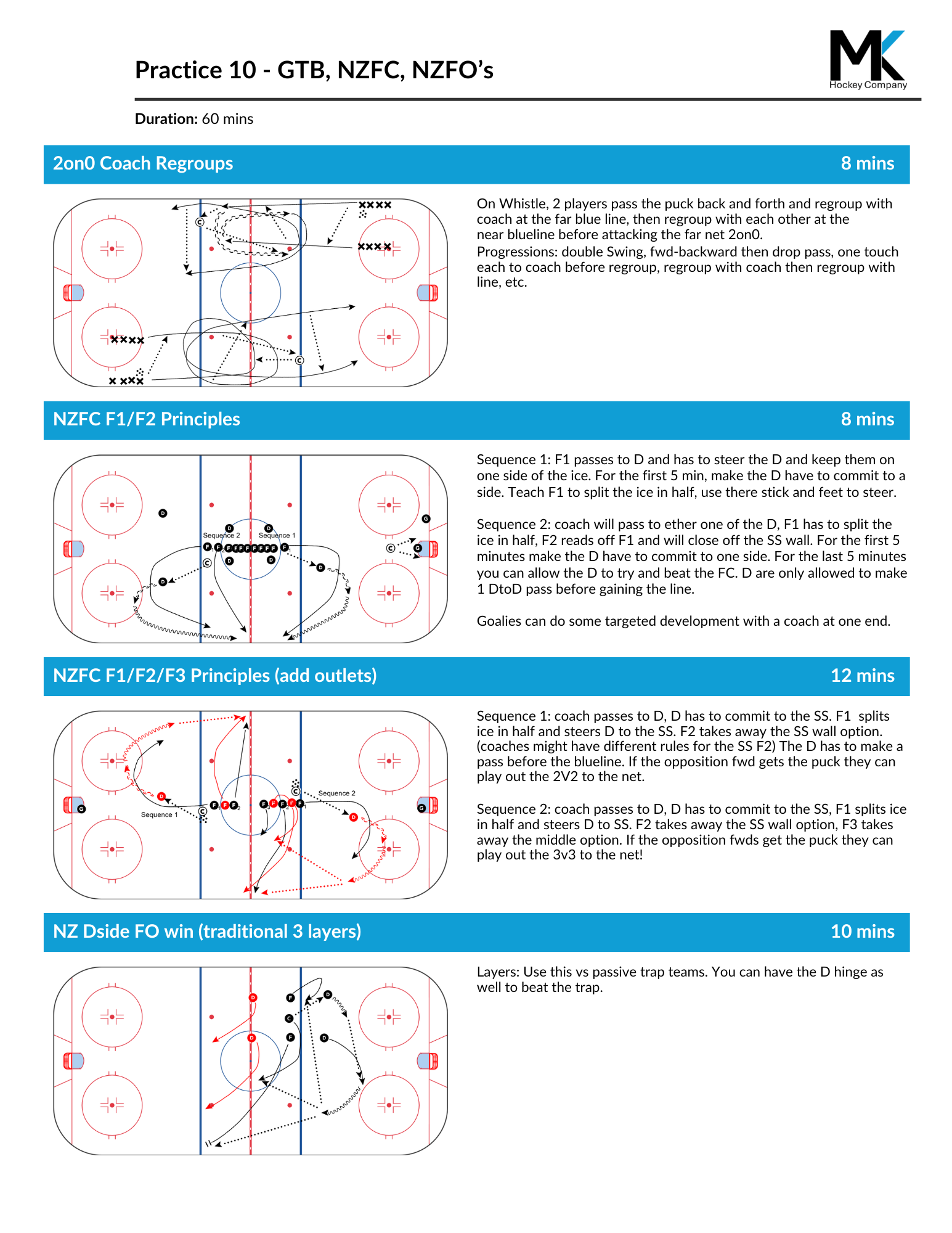
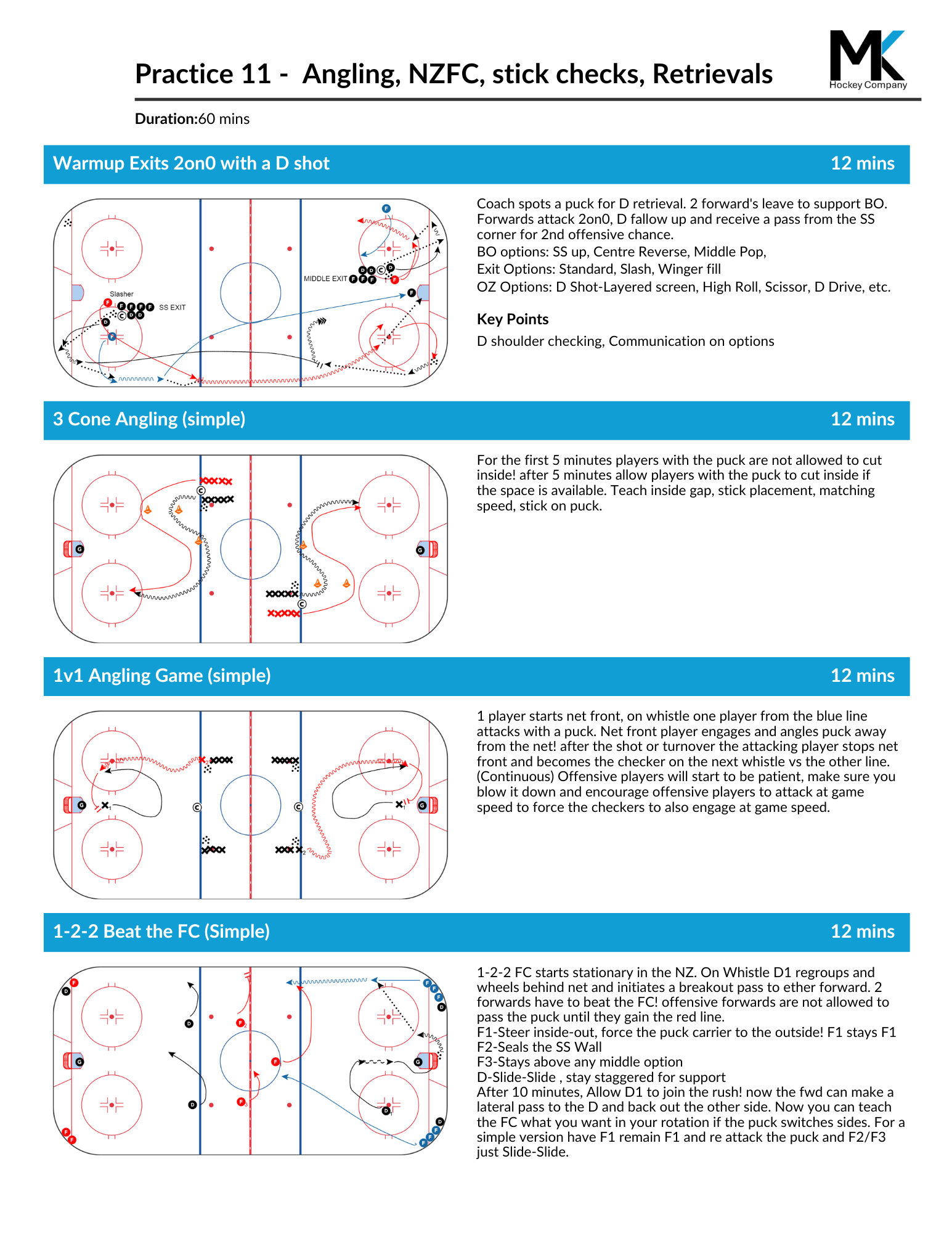
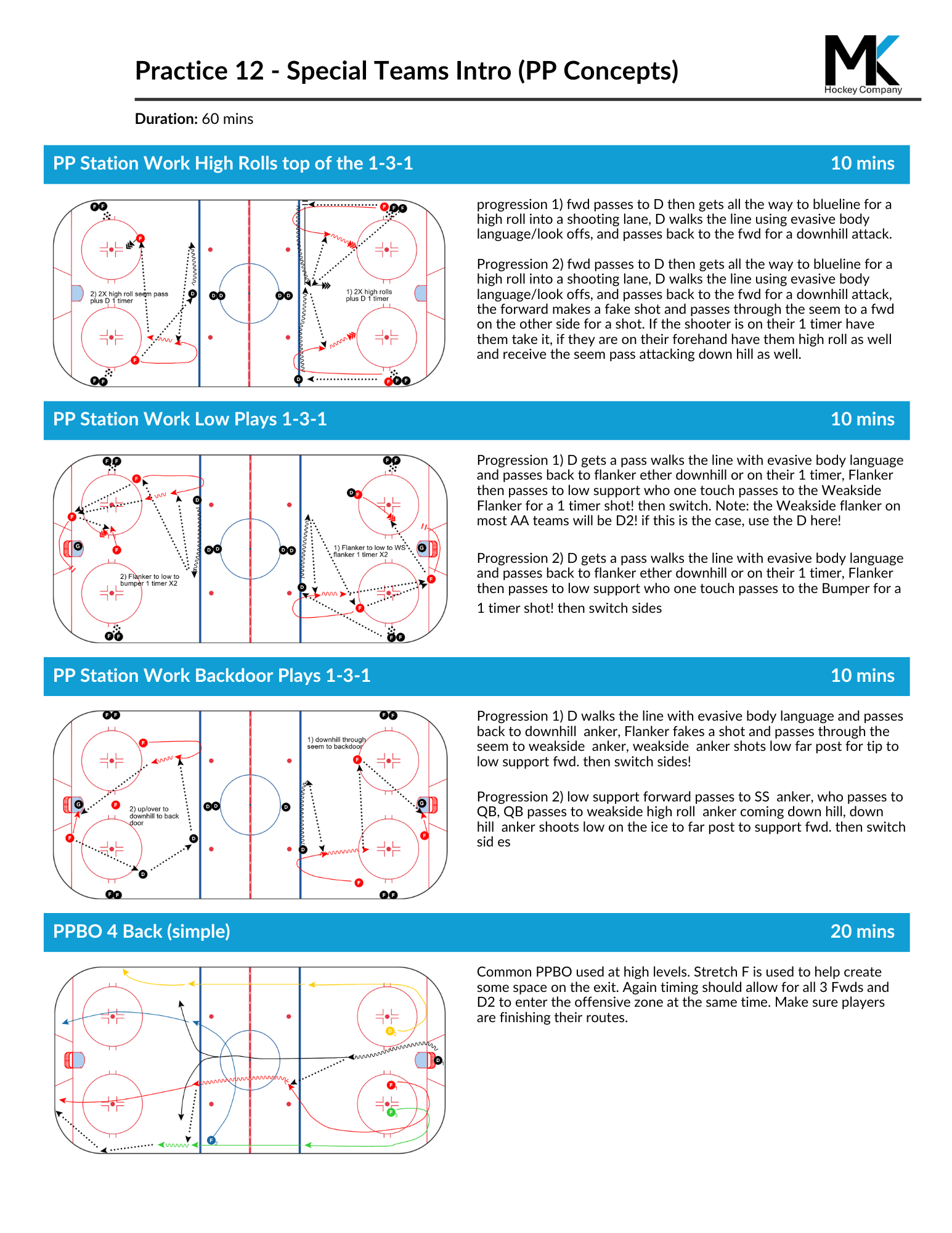
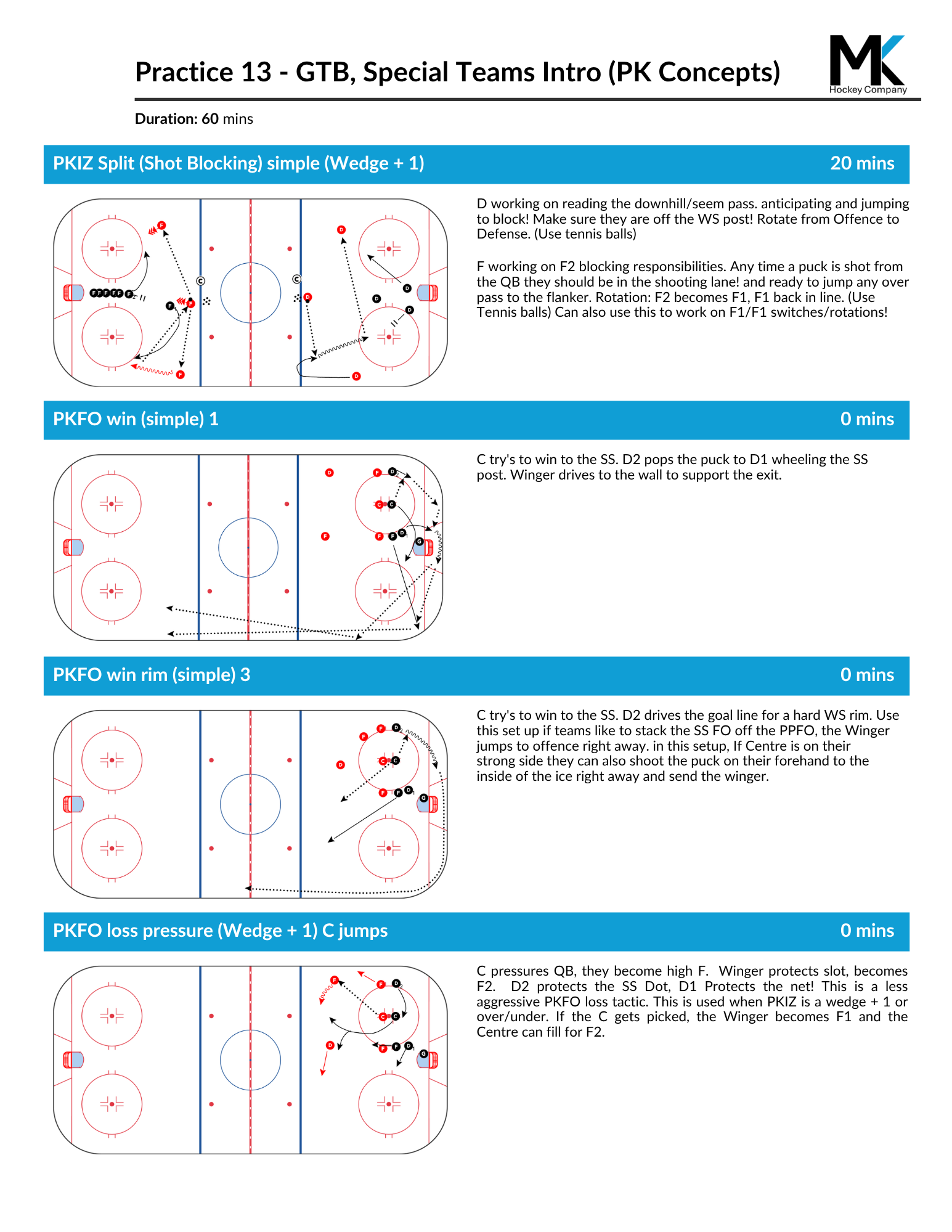
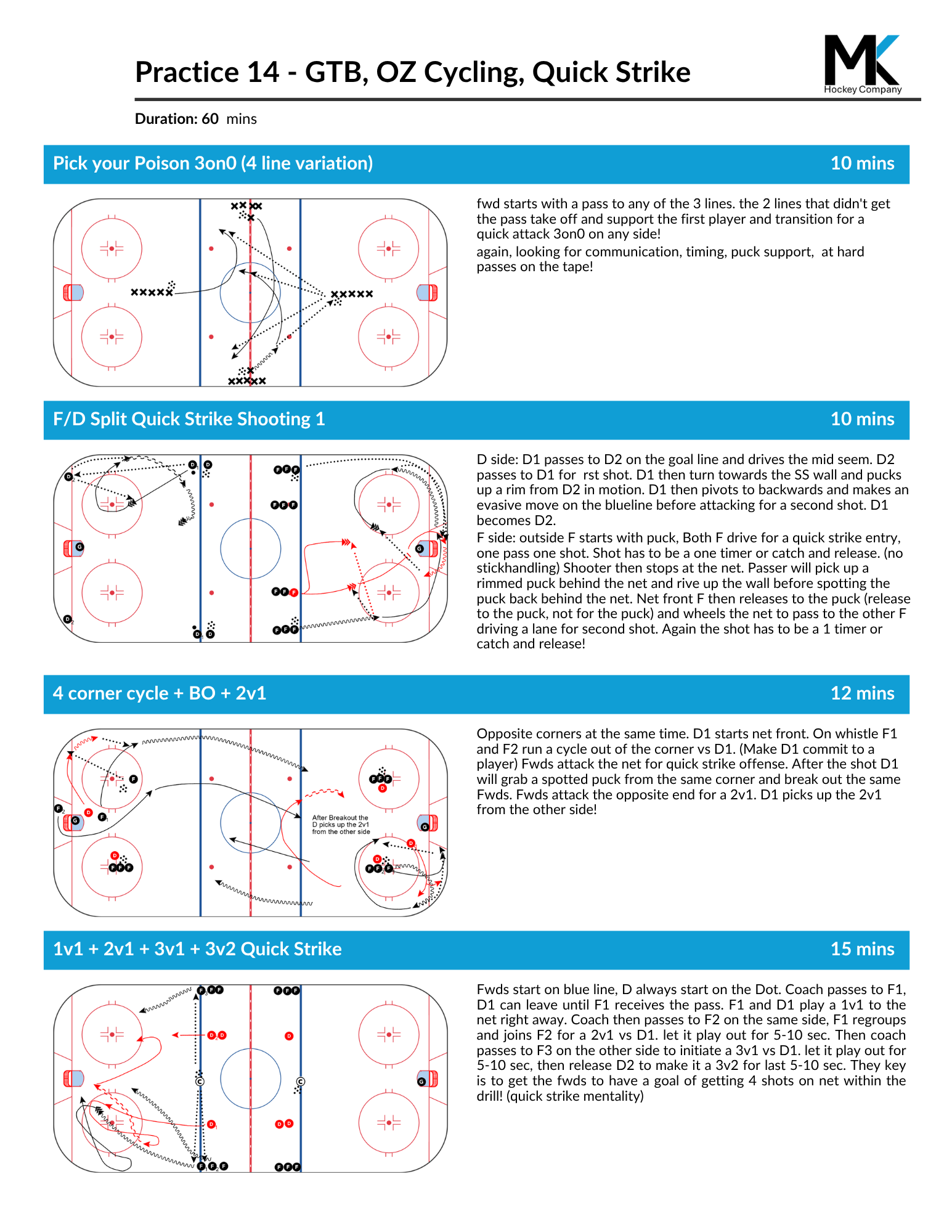
With the foundation established, players begin applying those skills within team concepts. This phase introduces defensive zone structure, faceoff execution, neutral zone play, angling, retrievals, and the fundamentals of special teams. Offensive zone cycling and quick-strike opportunities are also introduced, helping players recognize how individual decisions contribute to team success. By the end of this phase, players have a clear understanding of how their individual habits fit into the team's overall identity.
Phase 3 – Game Transfer Phase
(Practices 15-21)
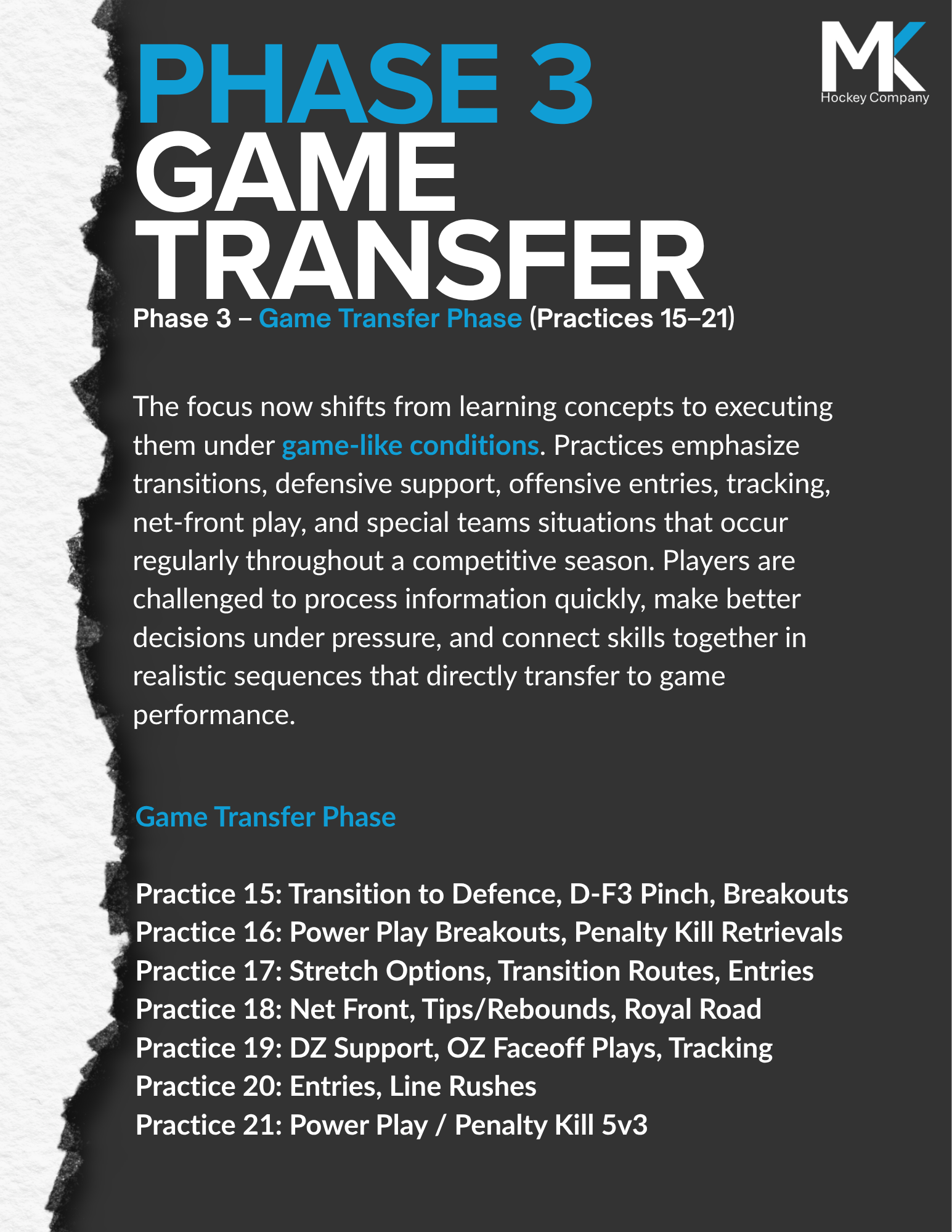
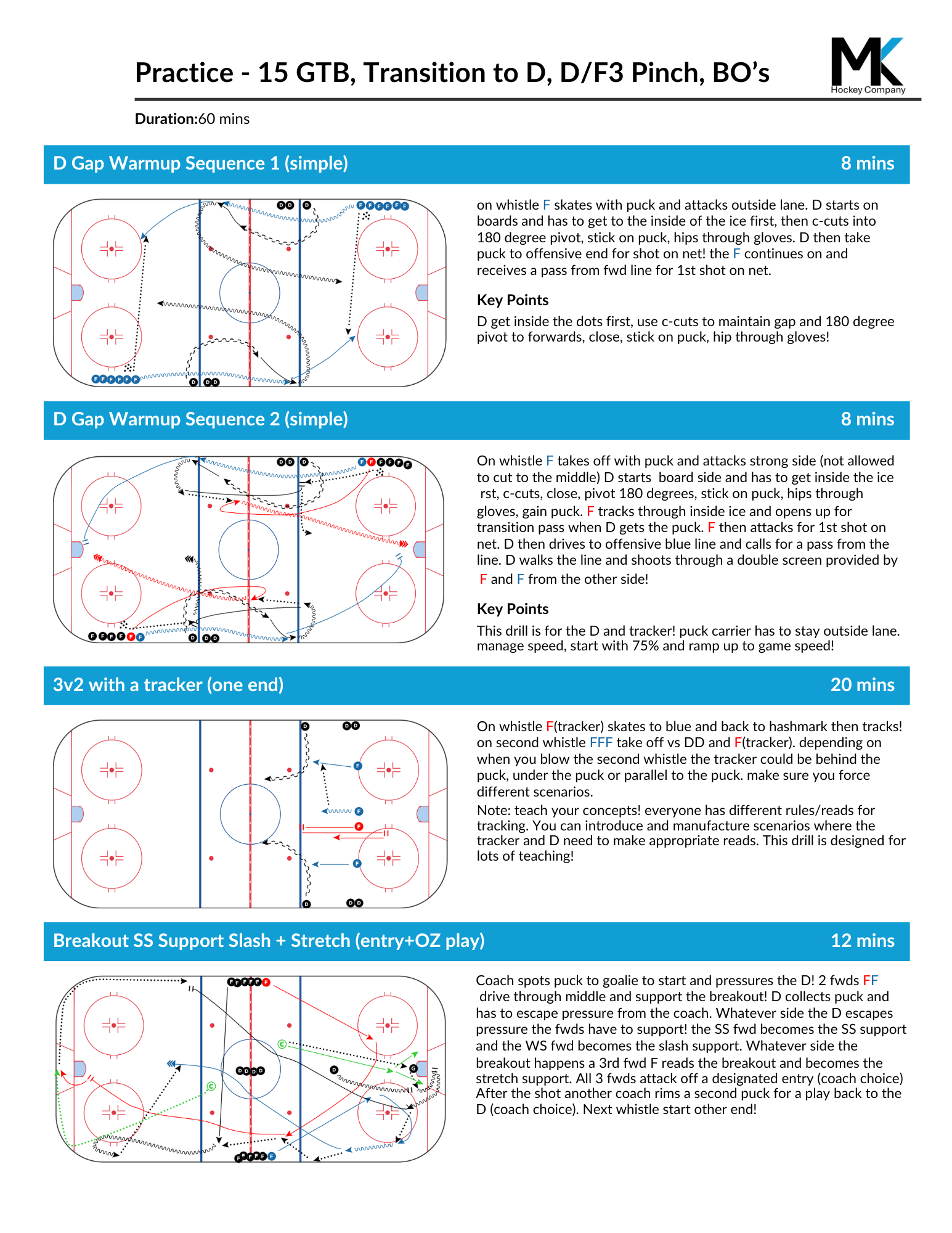
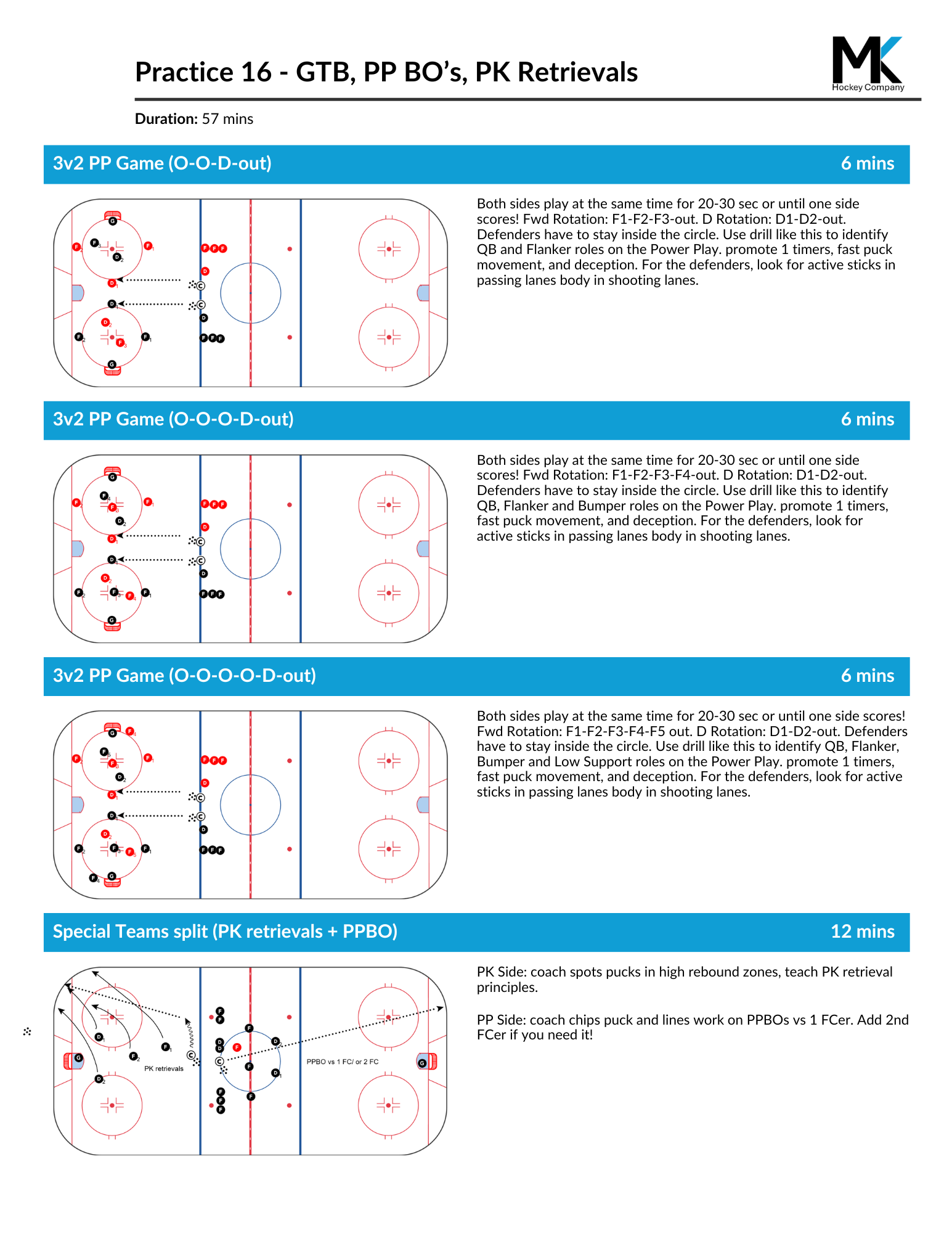
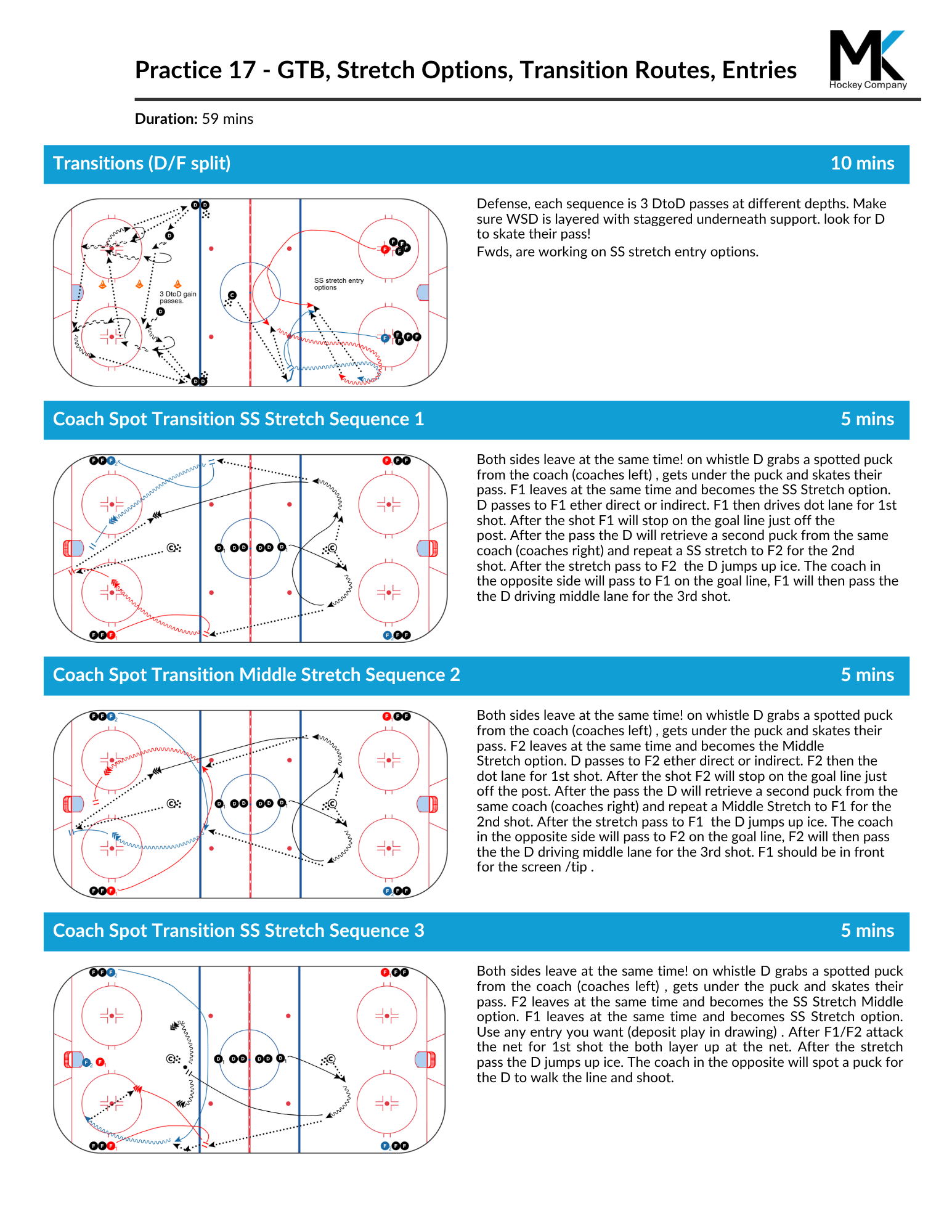
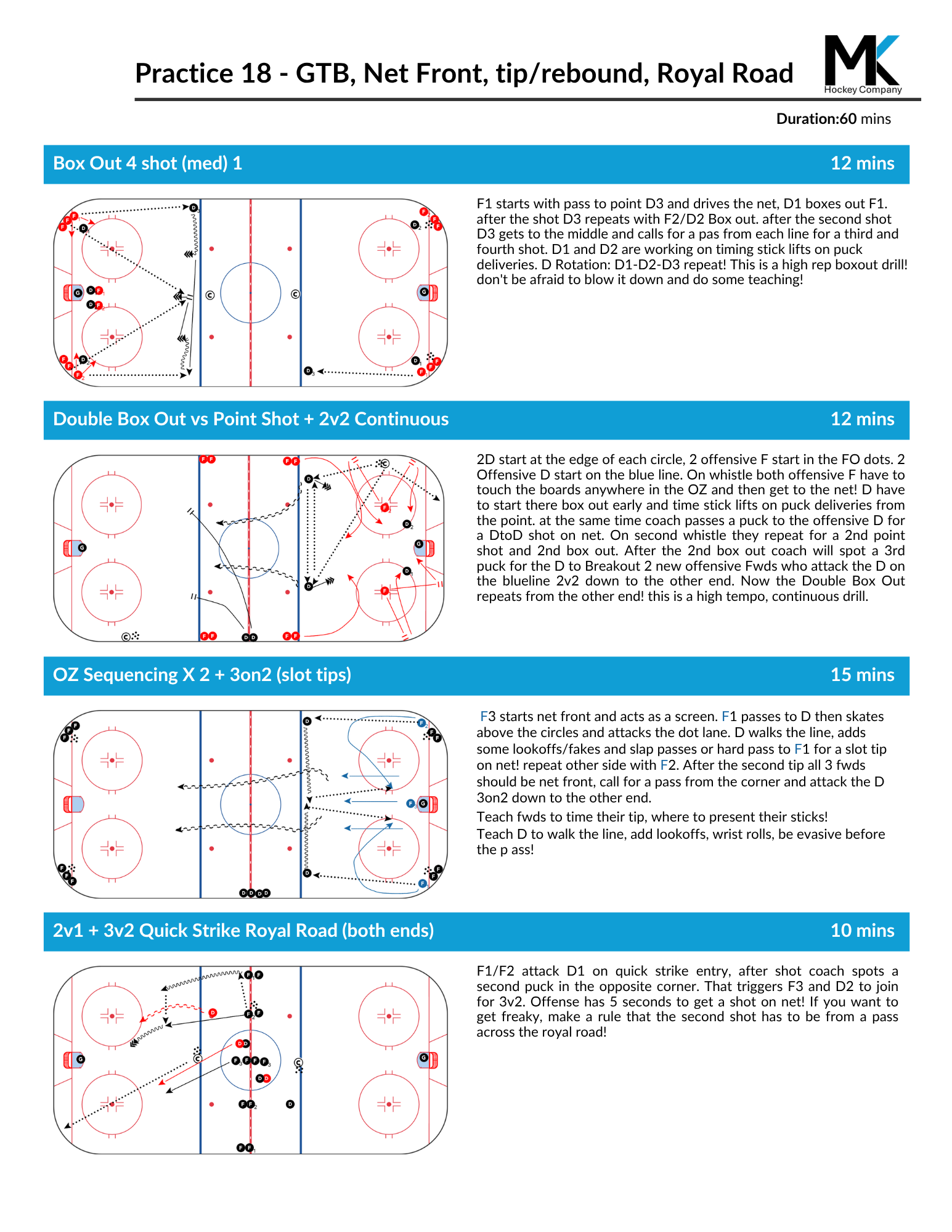
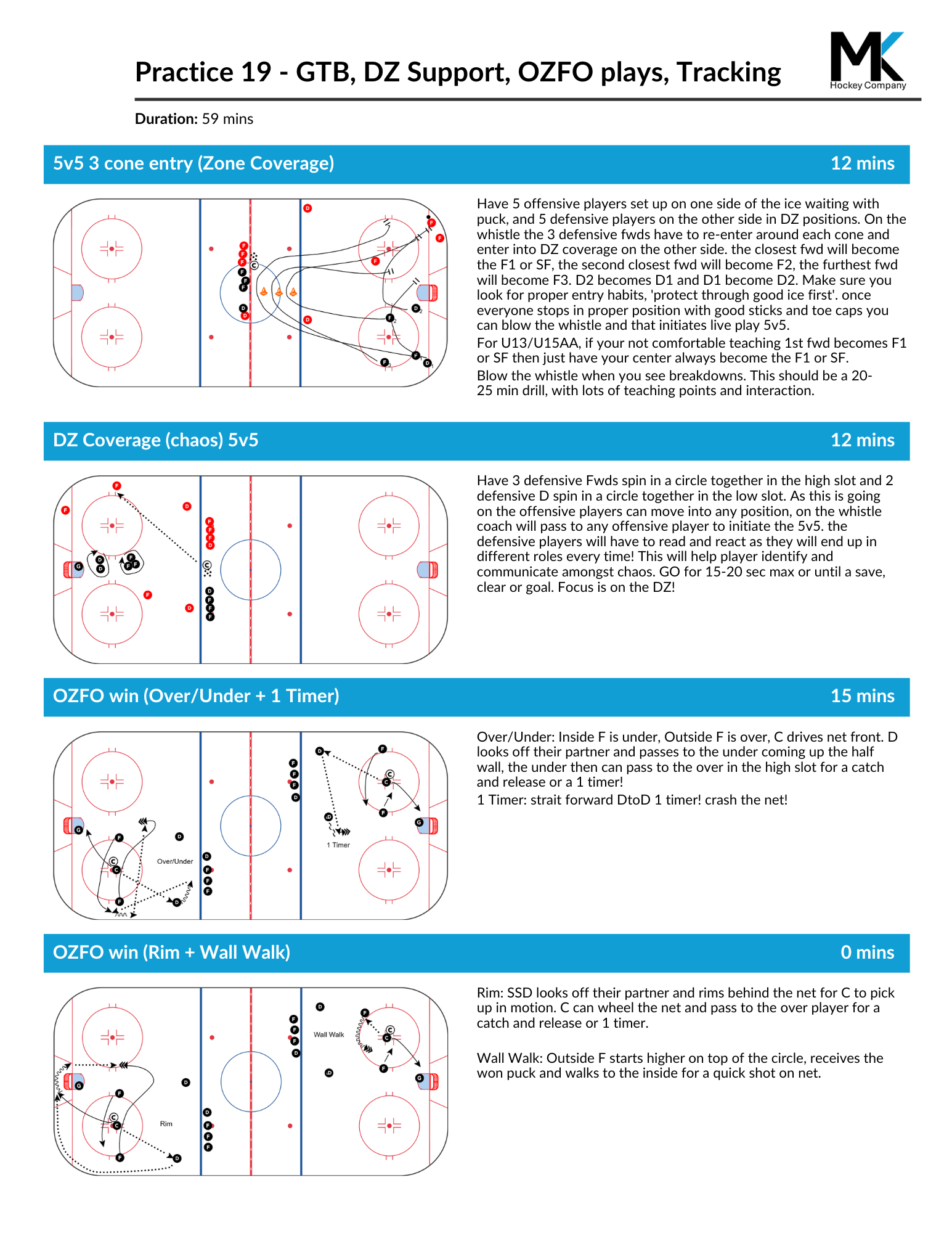
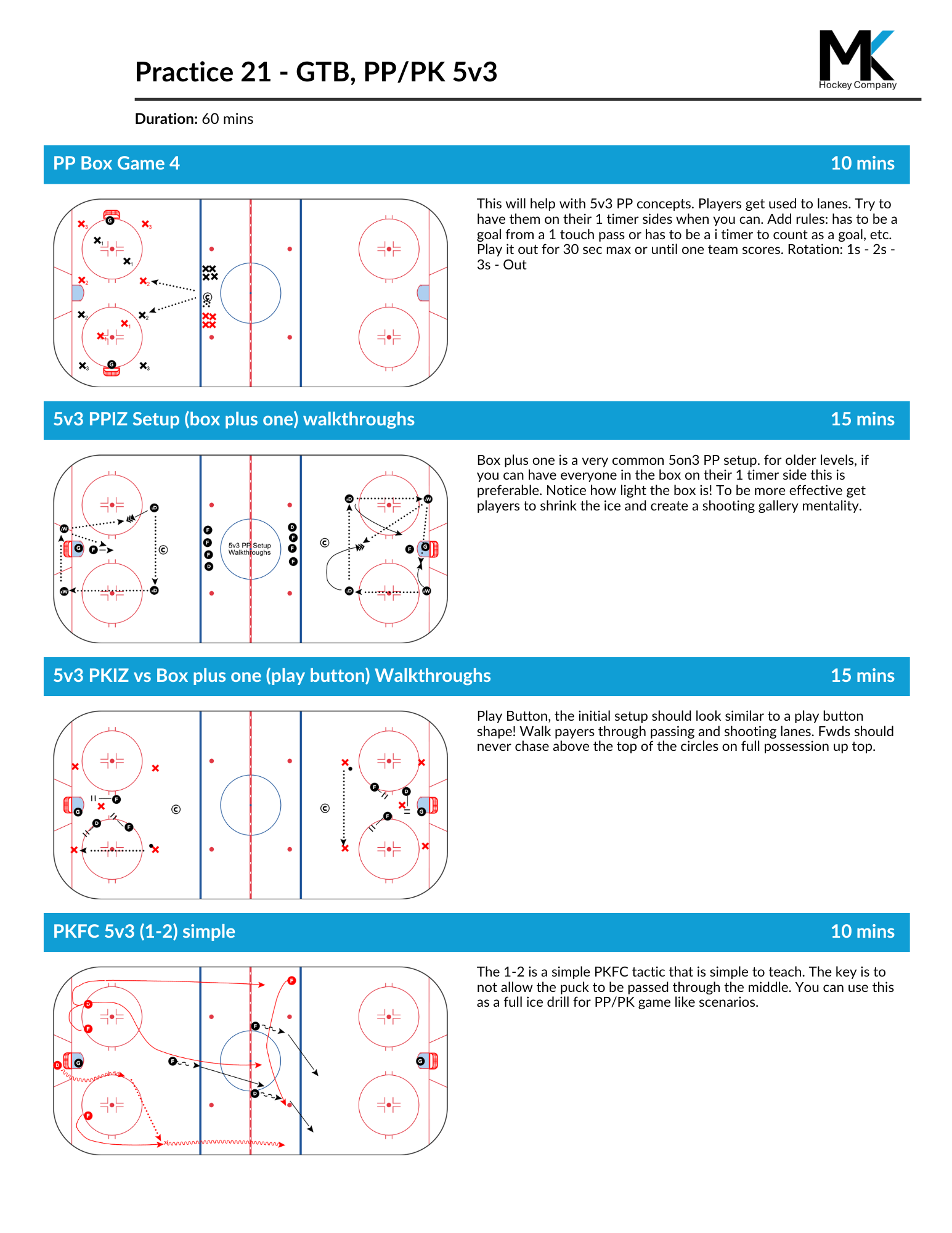
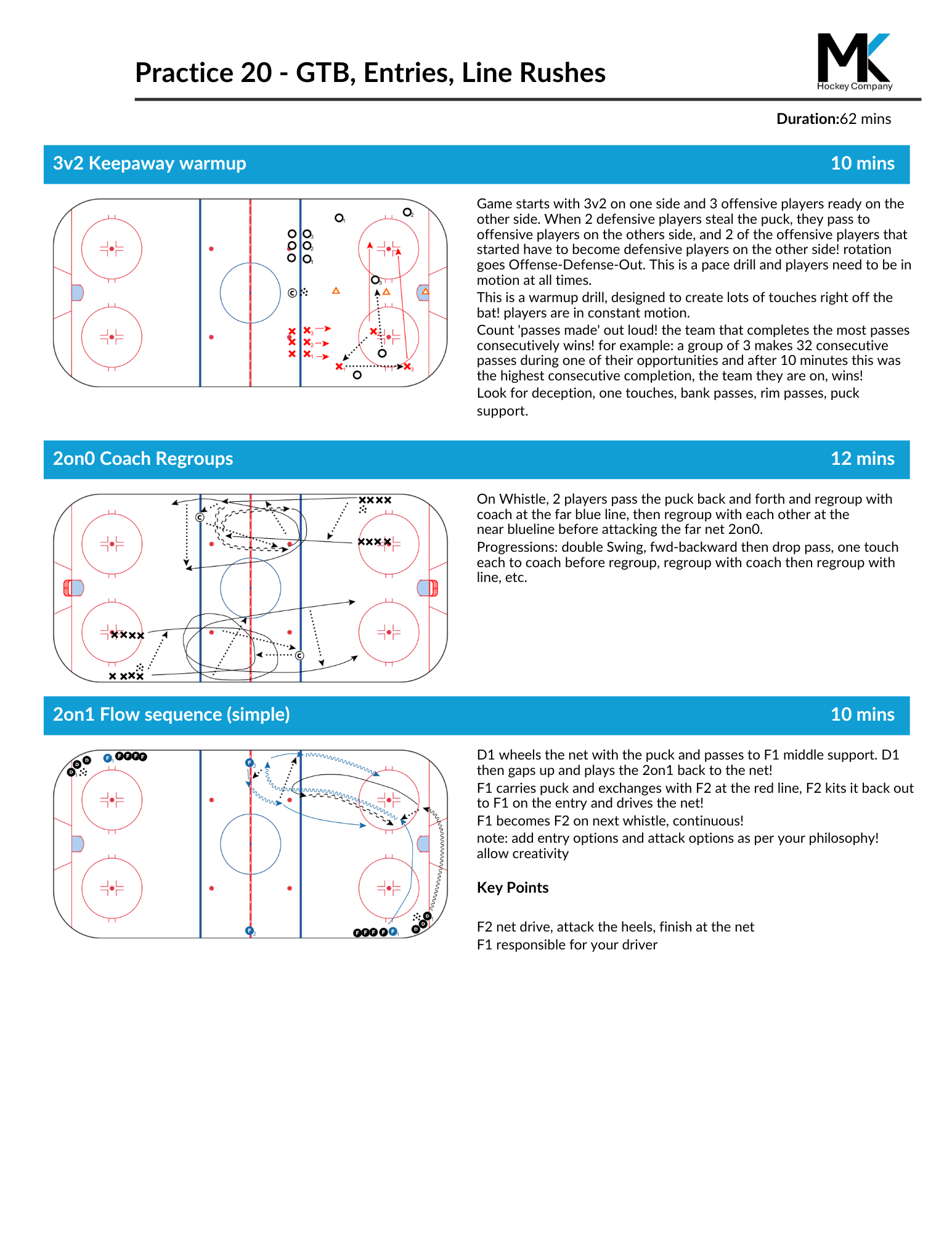
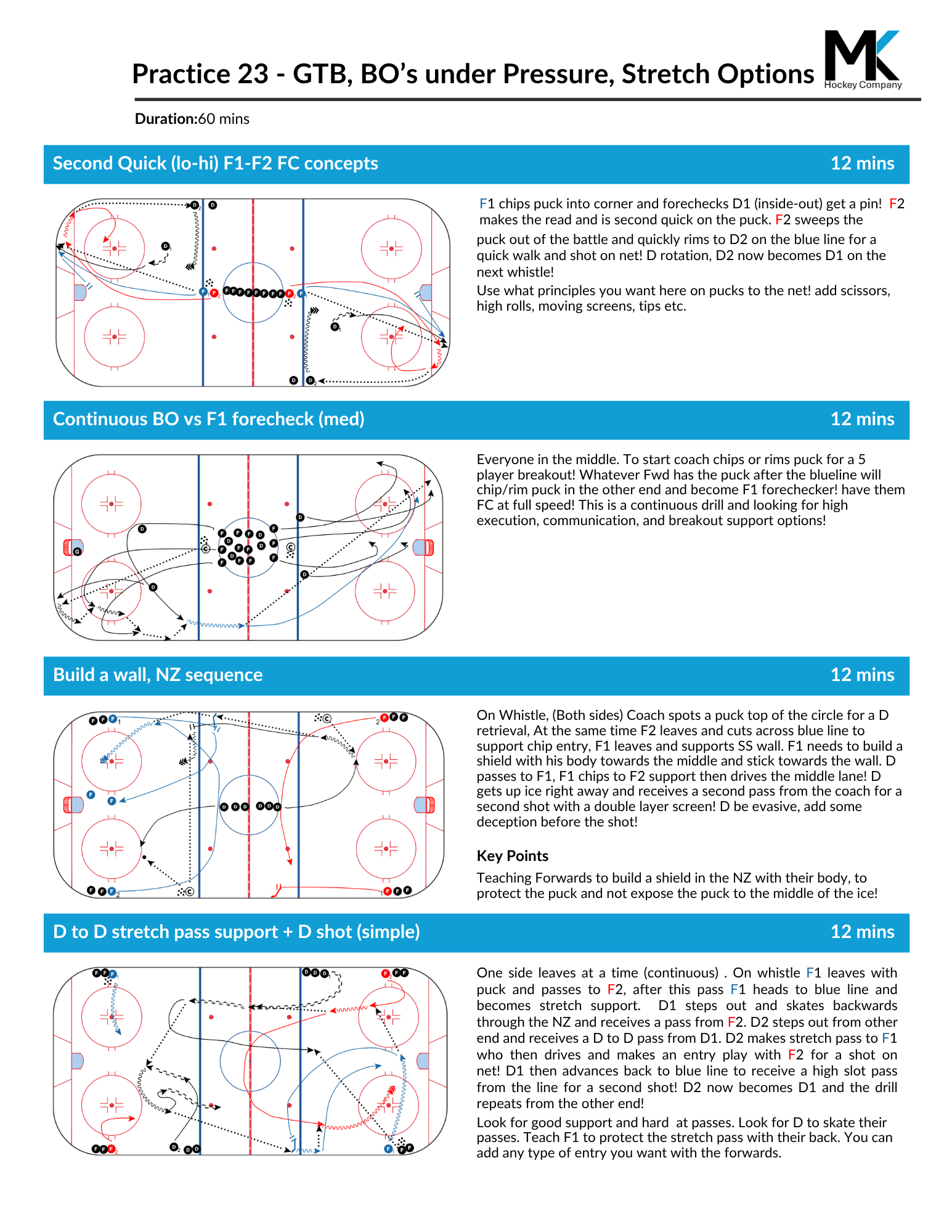
The focus now shifts from learning concepts to executing them under game-like conditions. Practices emphasize transitions, defensive support, offensive entries, tracking, net-front play, and special teams situations that occur regularly throughout a competitive season. Players are challenged to process information quickly, make better decisions under pressure, and connect skills together in realistic sequences that directly transfer to game performance.
Phase 4 – Mid Season Refinement
(Practices 22-28)
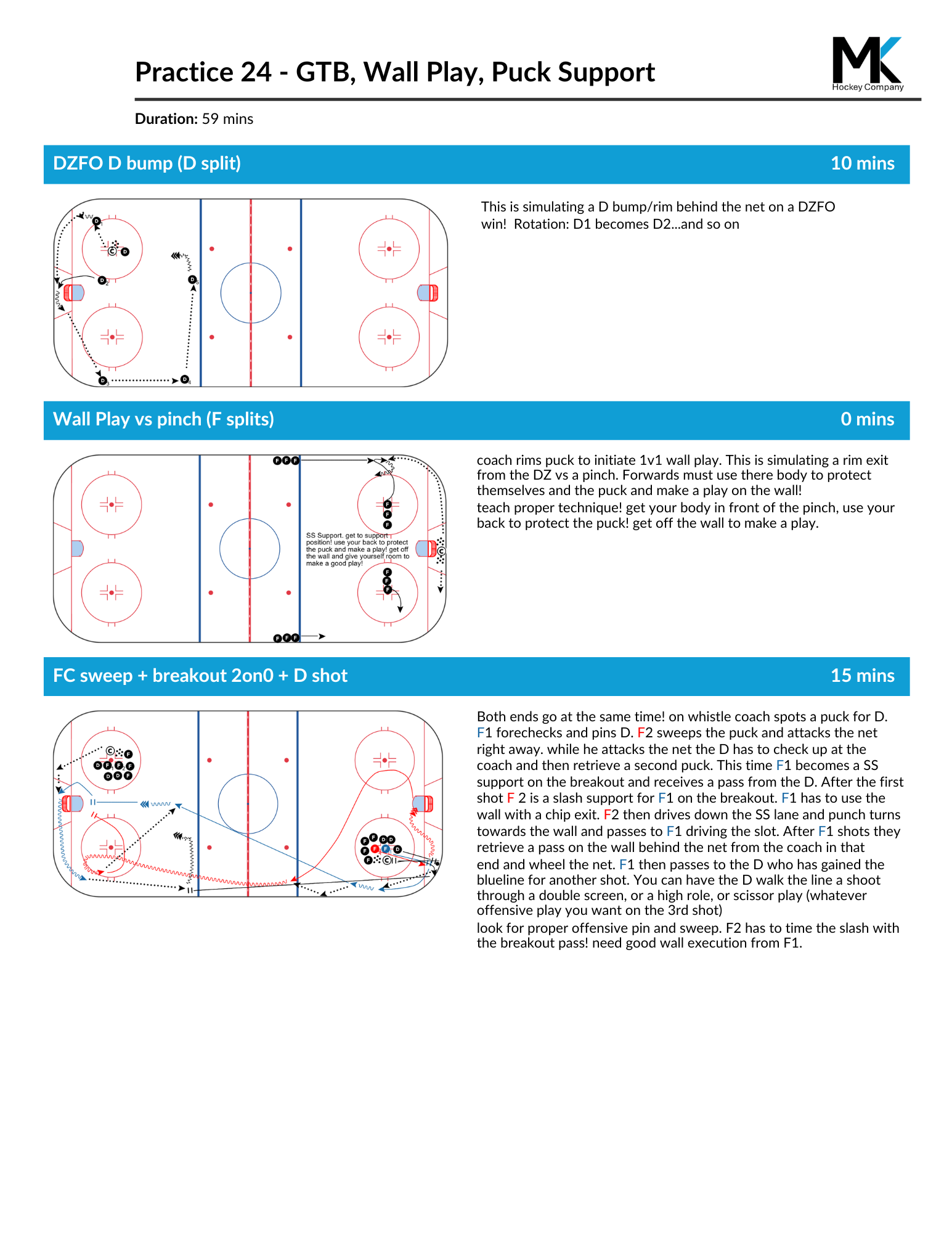
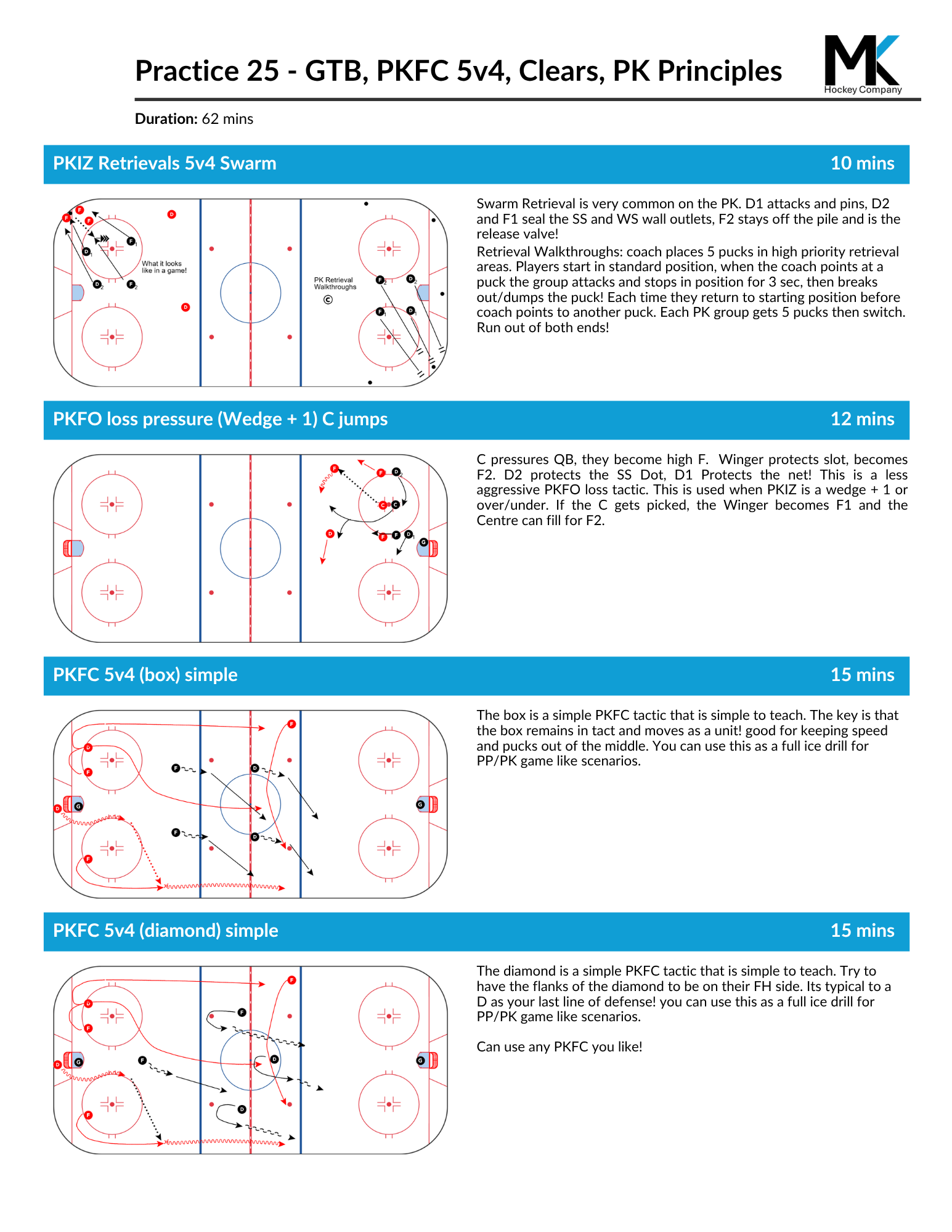
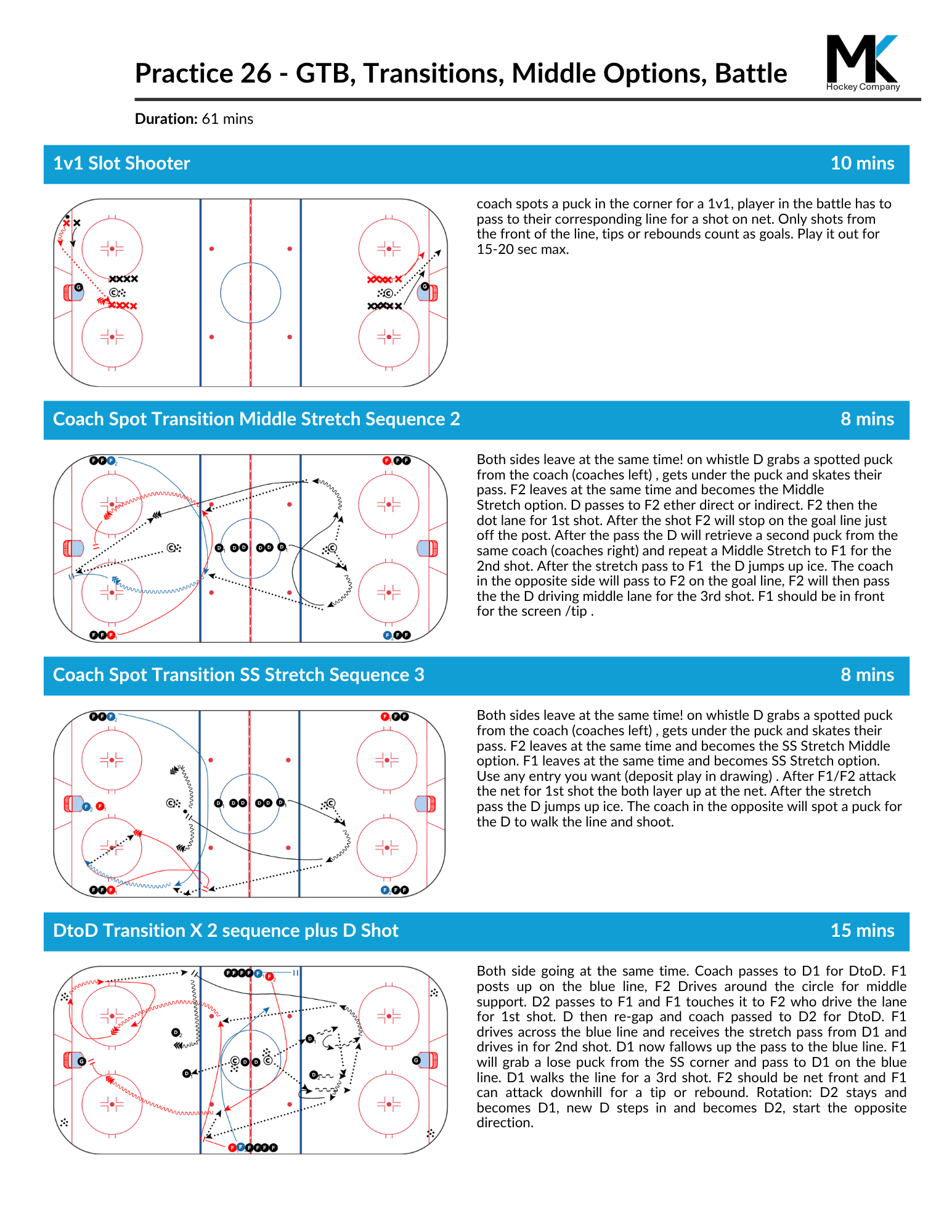
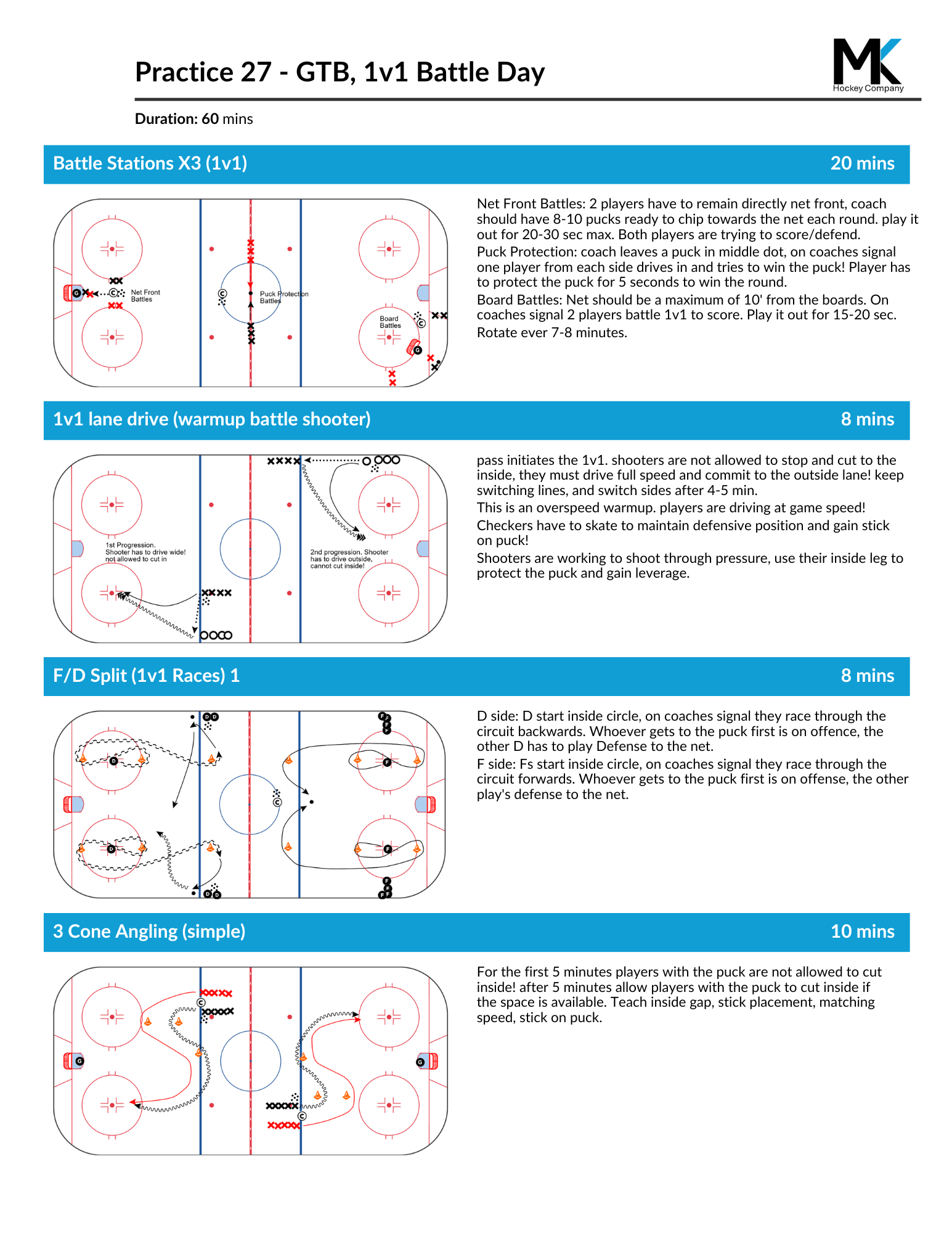
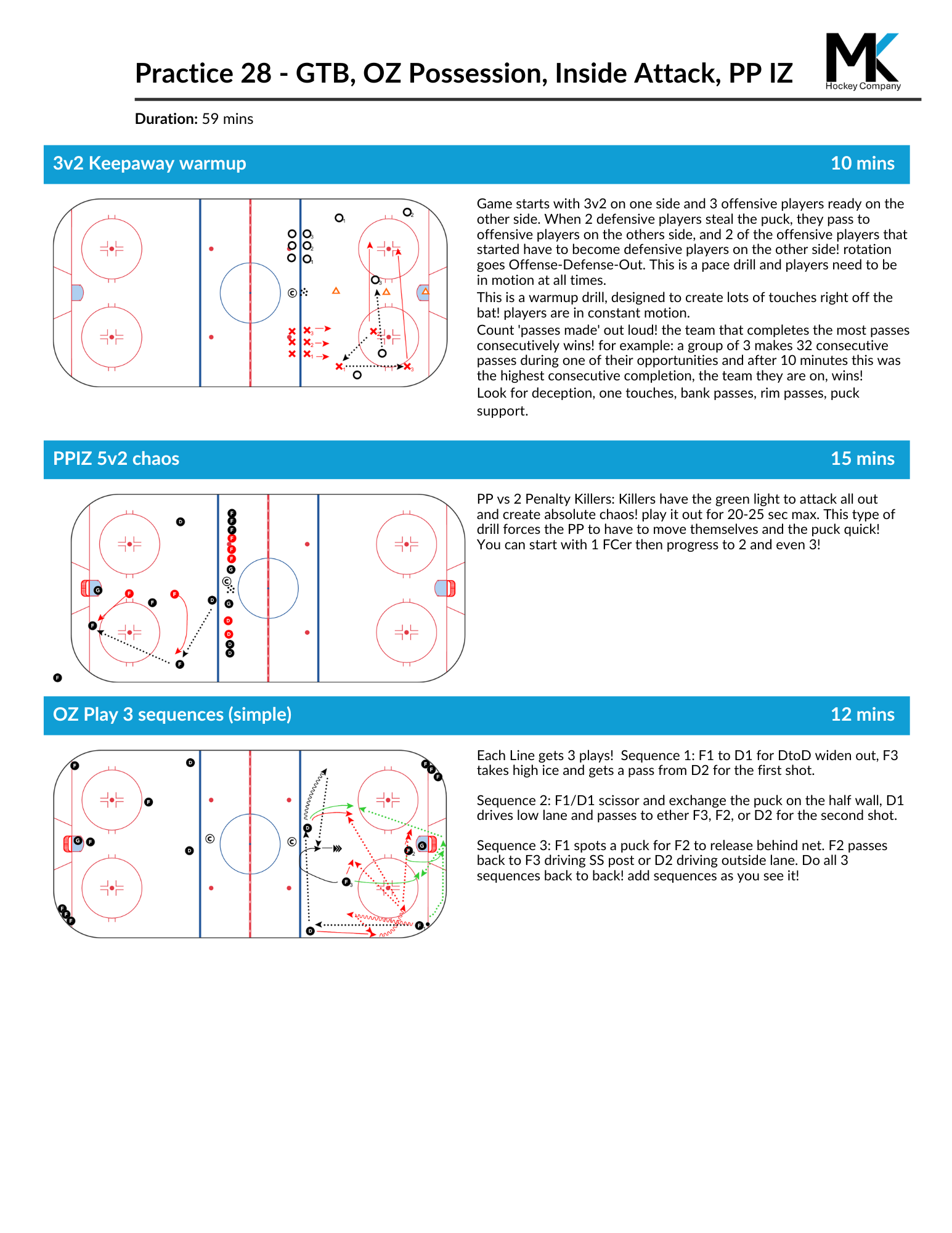
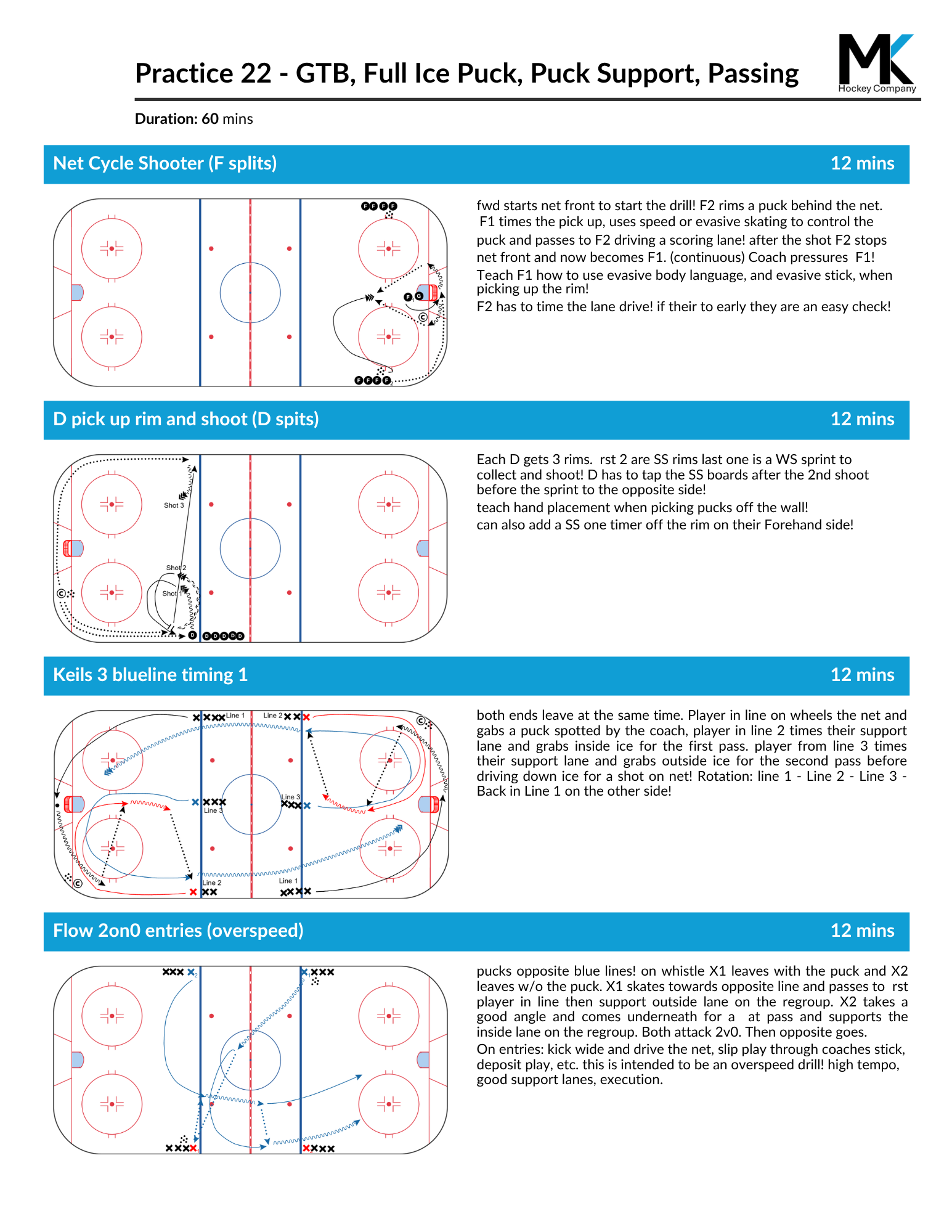
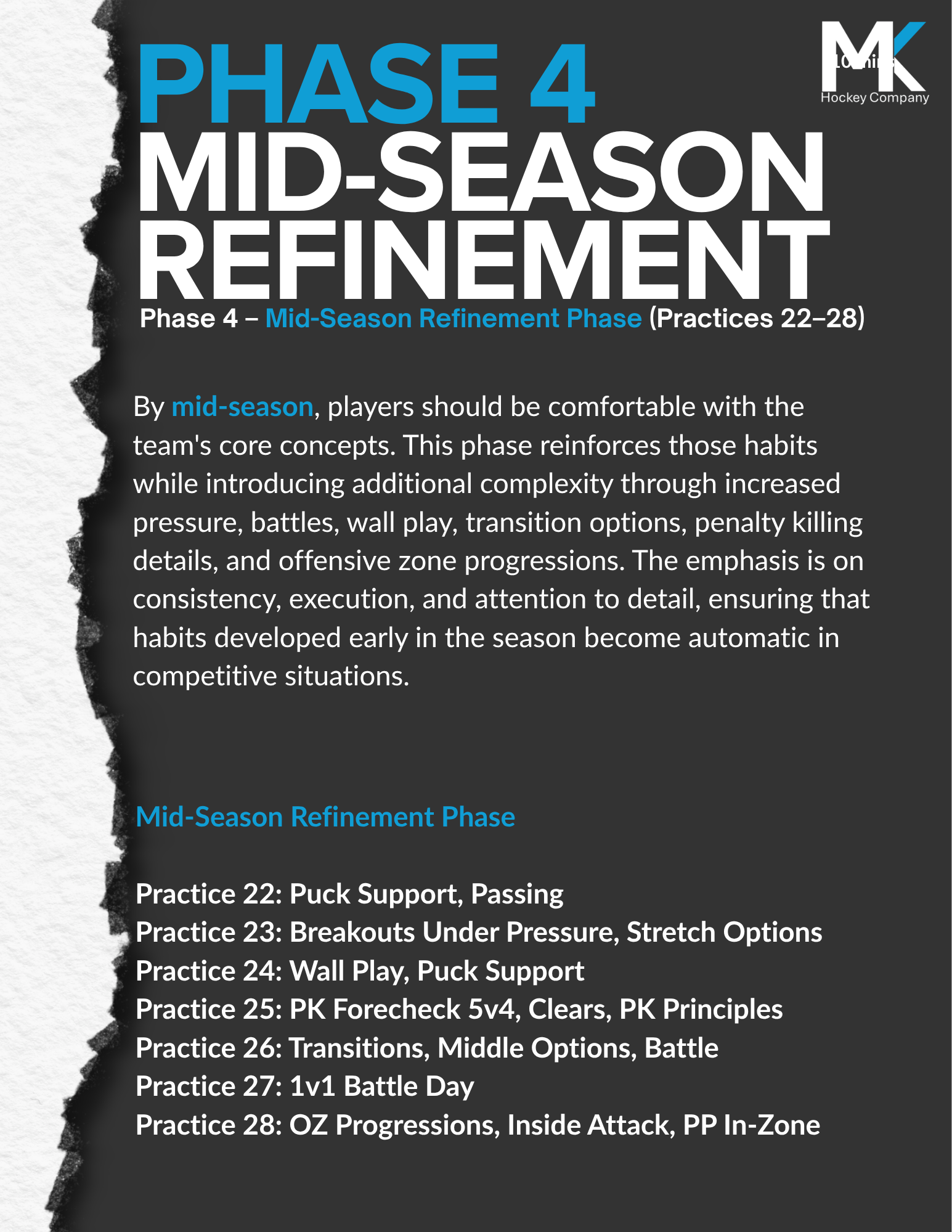
By mid-season, players should be comfortable with the team's core concepts. This phase reinforces those habits while introducing additional complexity through increased pressure, battles, wall play, transition options, penalty killing details, and offensive zone progressions. The emphasis is on consistency, execution, and attention to detail, ensuring that habits developed early in the season become automatic in competitive situations.
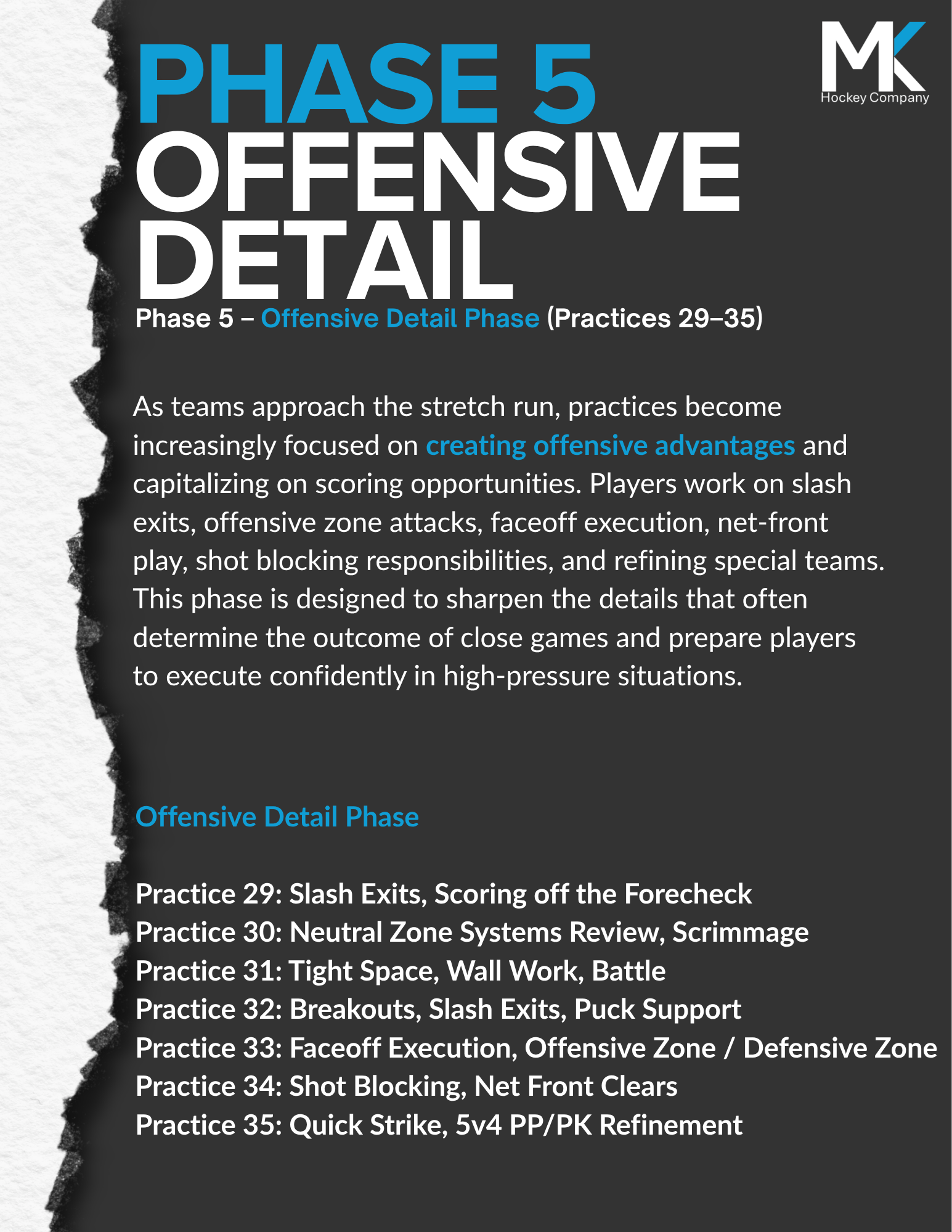
Phase 5 – Offensive Detail
(Practices 29-35)
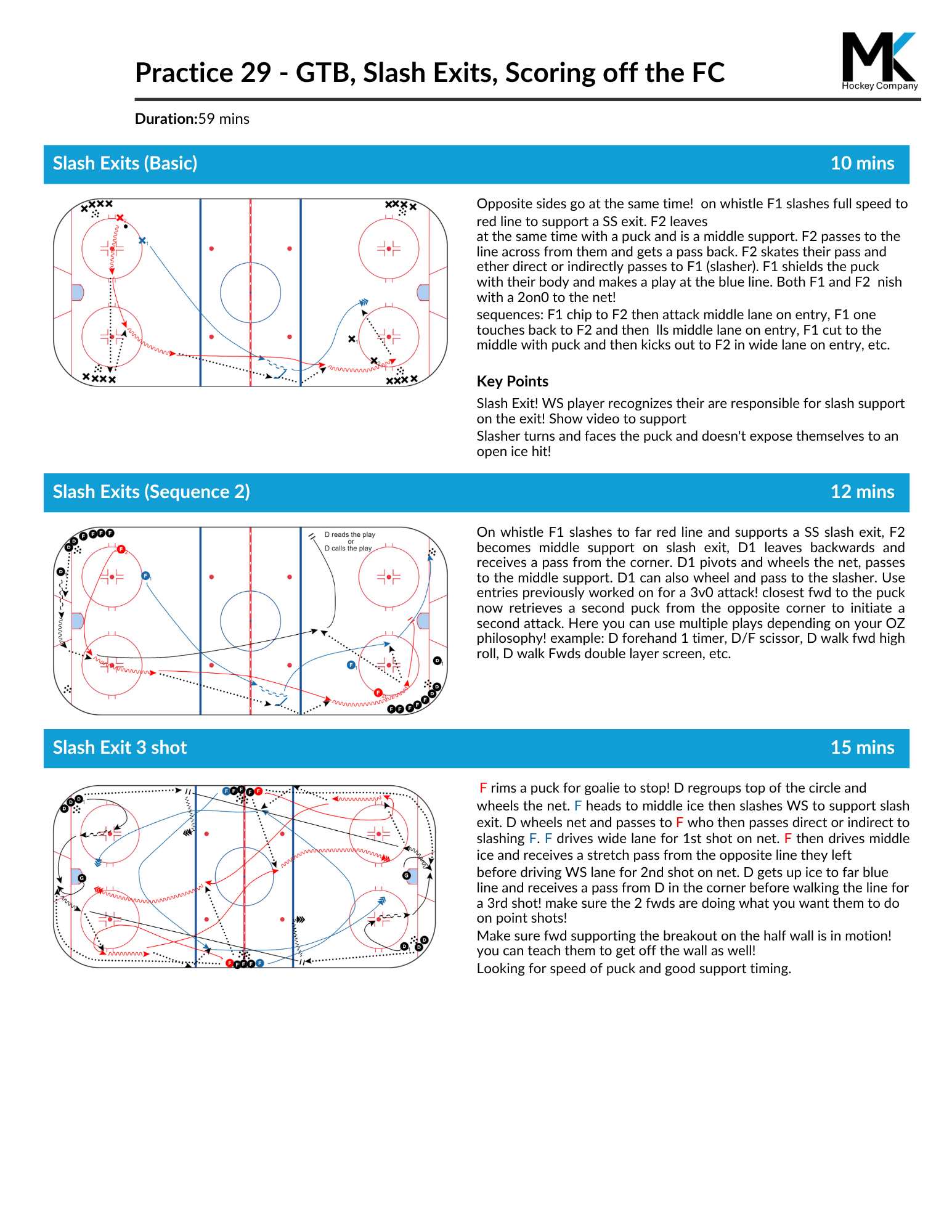
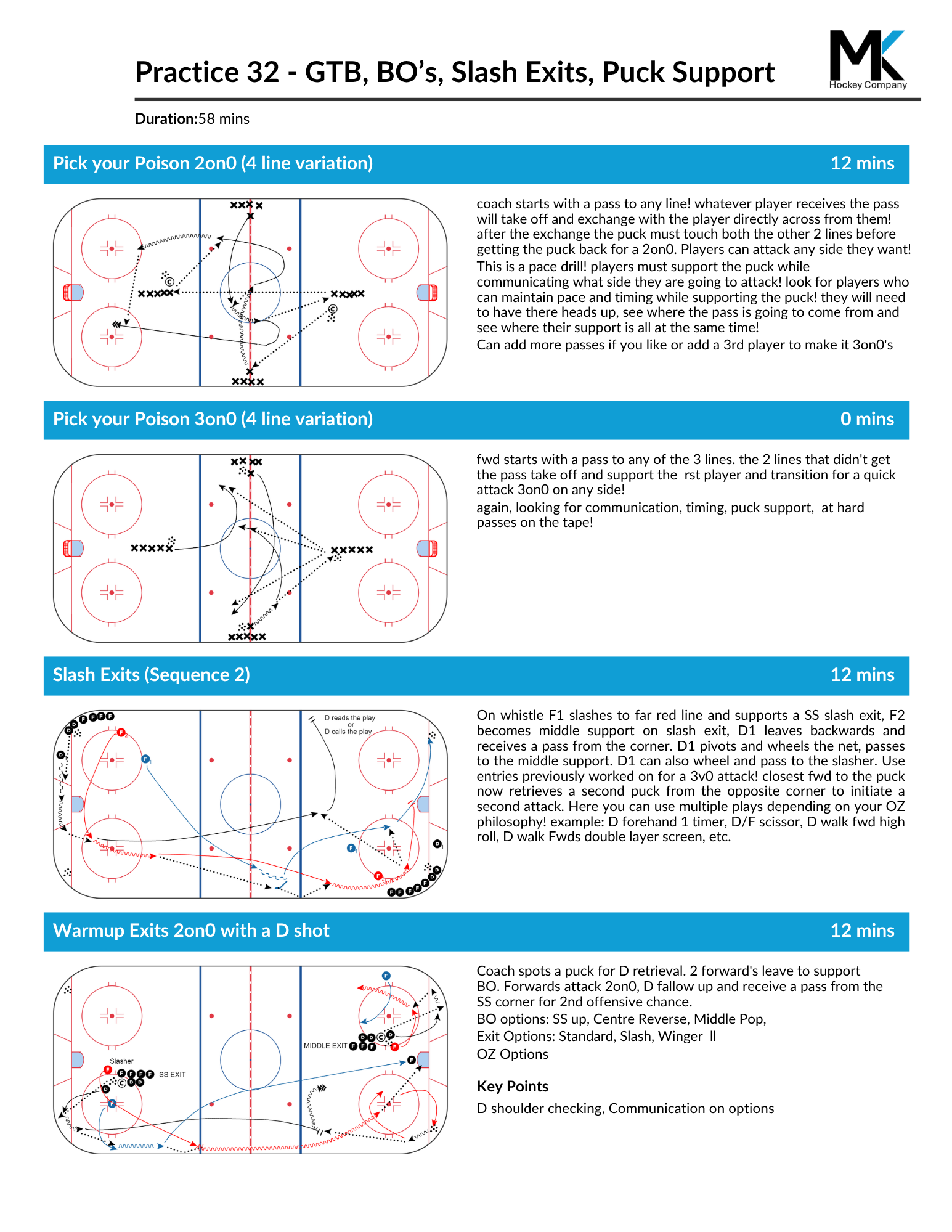
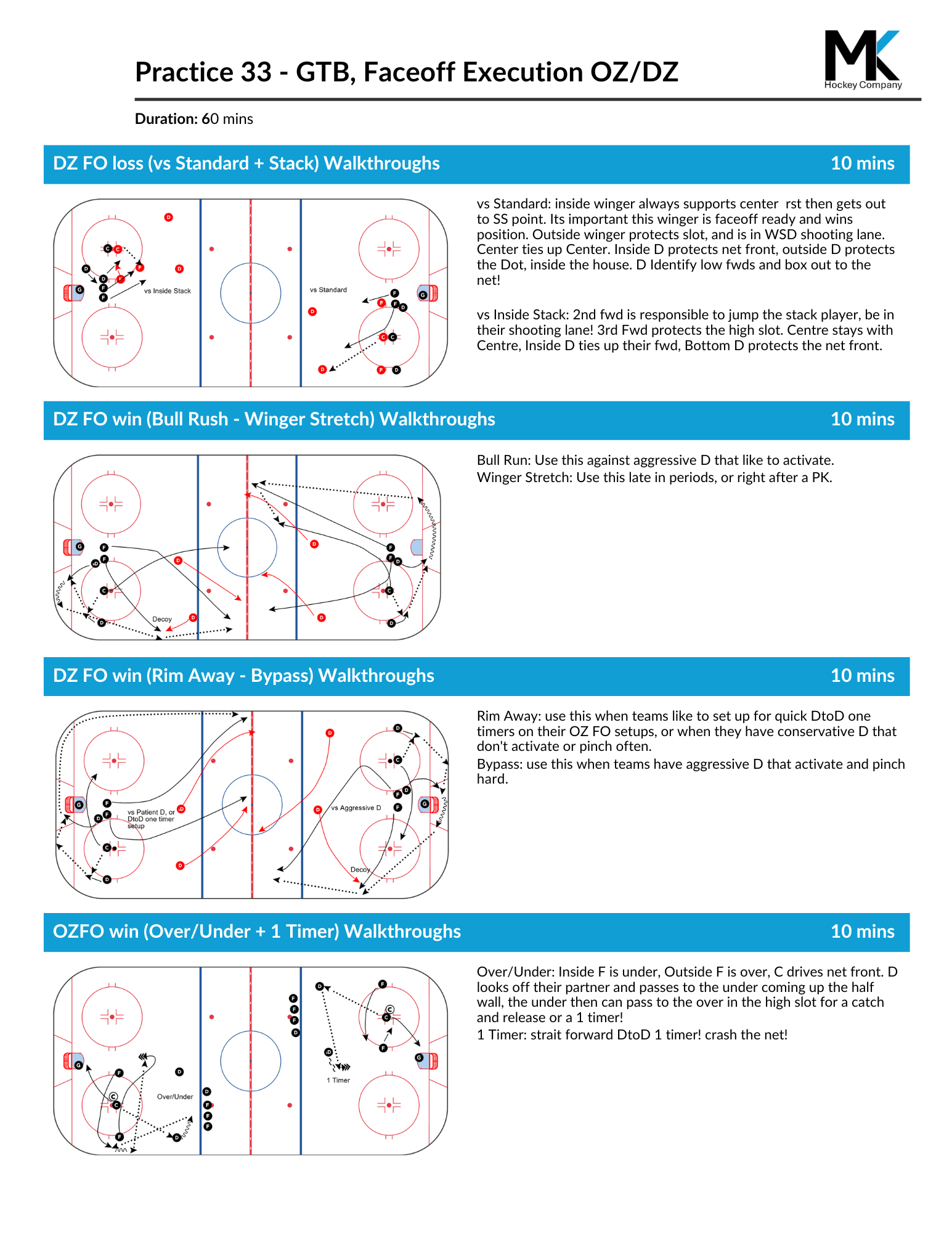
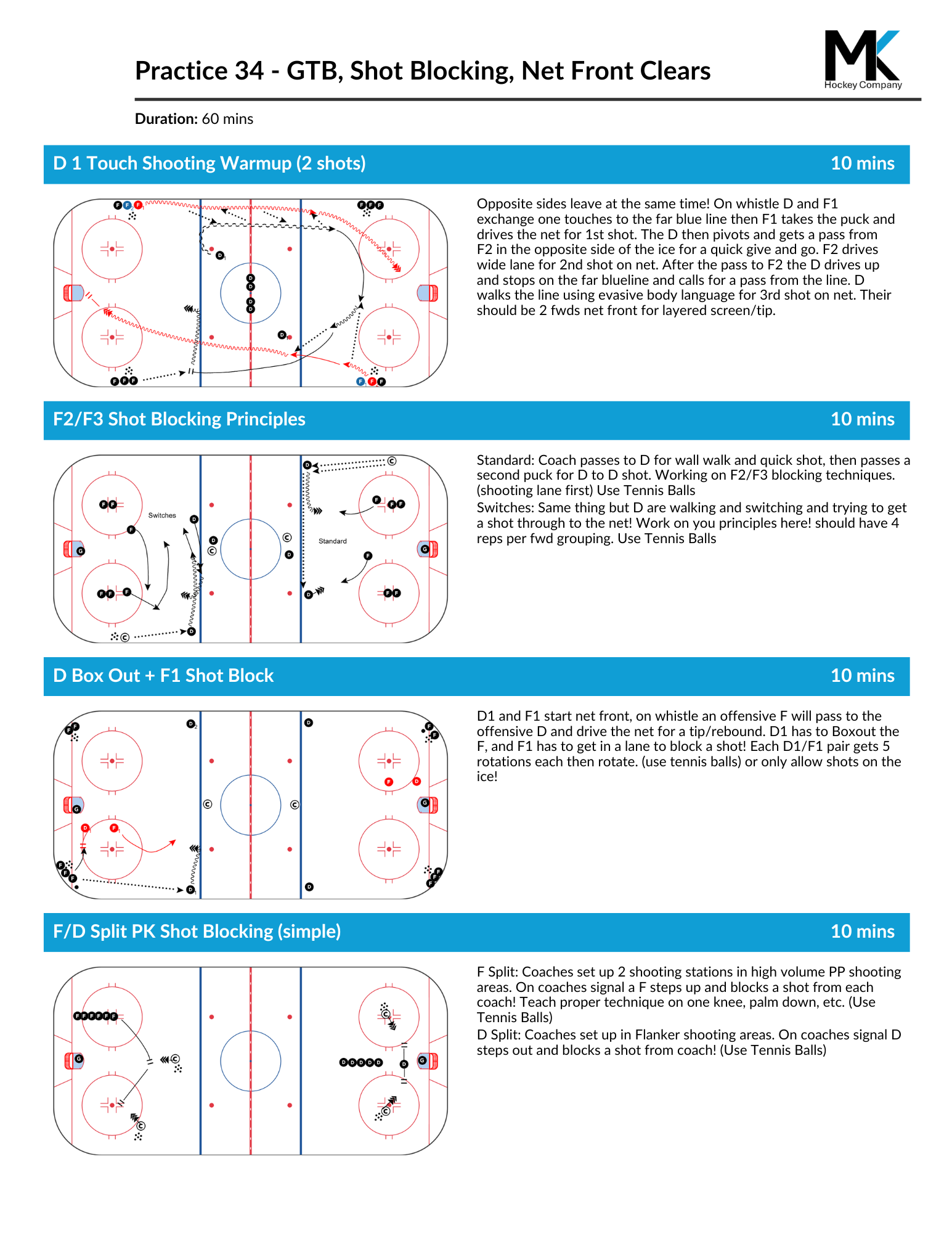
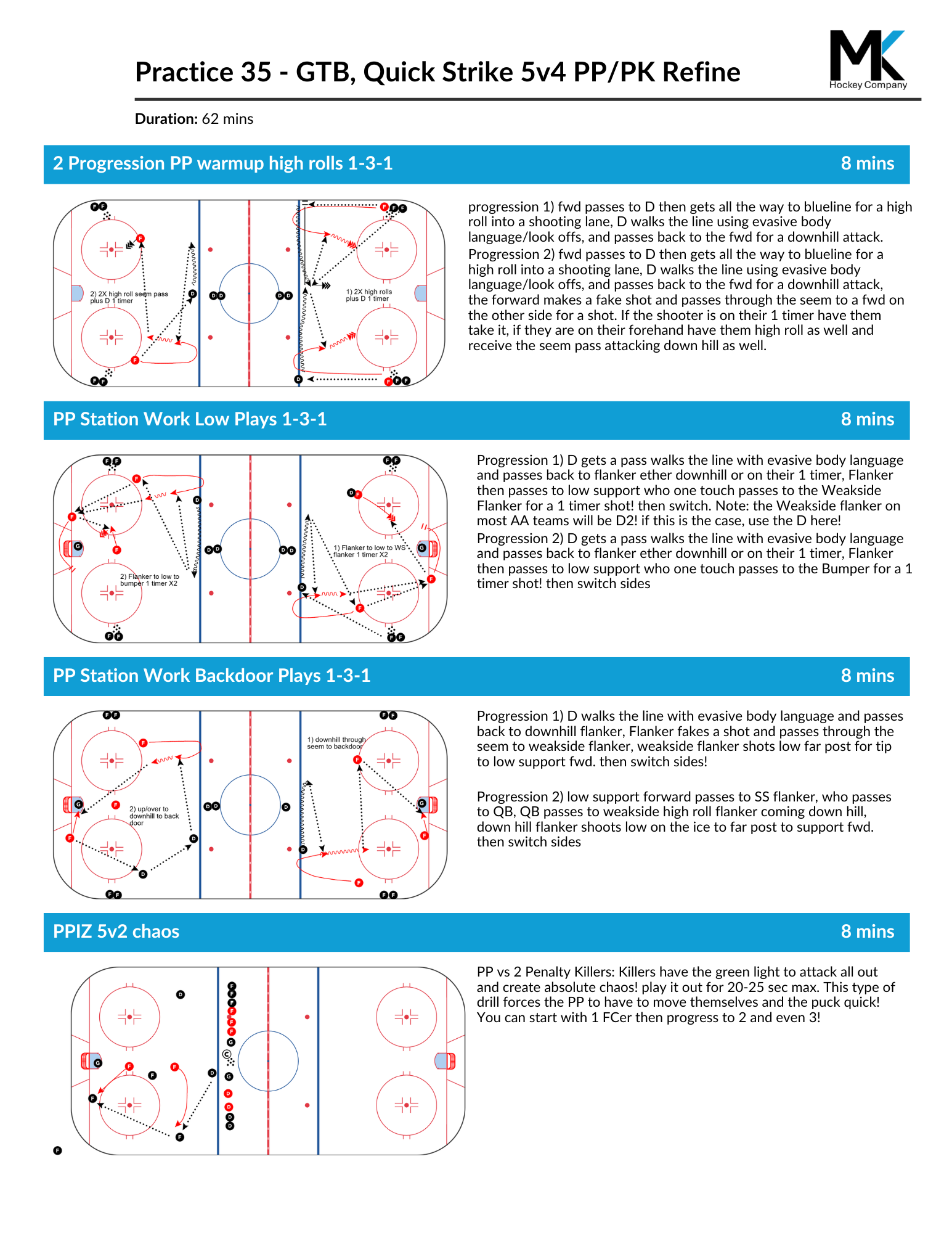
As teams approach the stretch run, practices become increasingly focused on creating offensive advantages and capitalizing on scoring opportunities. Players work on slash exits, offensive zone attacks, faceoff execution, net-front play, shot blocking responsibilities, and refining special teams. This phase is designed to sharpen the details that often determine the outcome of close games and prepare players to execute confidently in high-pressure situations.
Phase 6 – Playoff Preparation
(Practices 37-42)
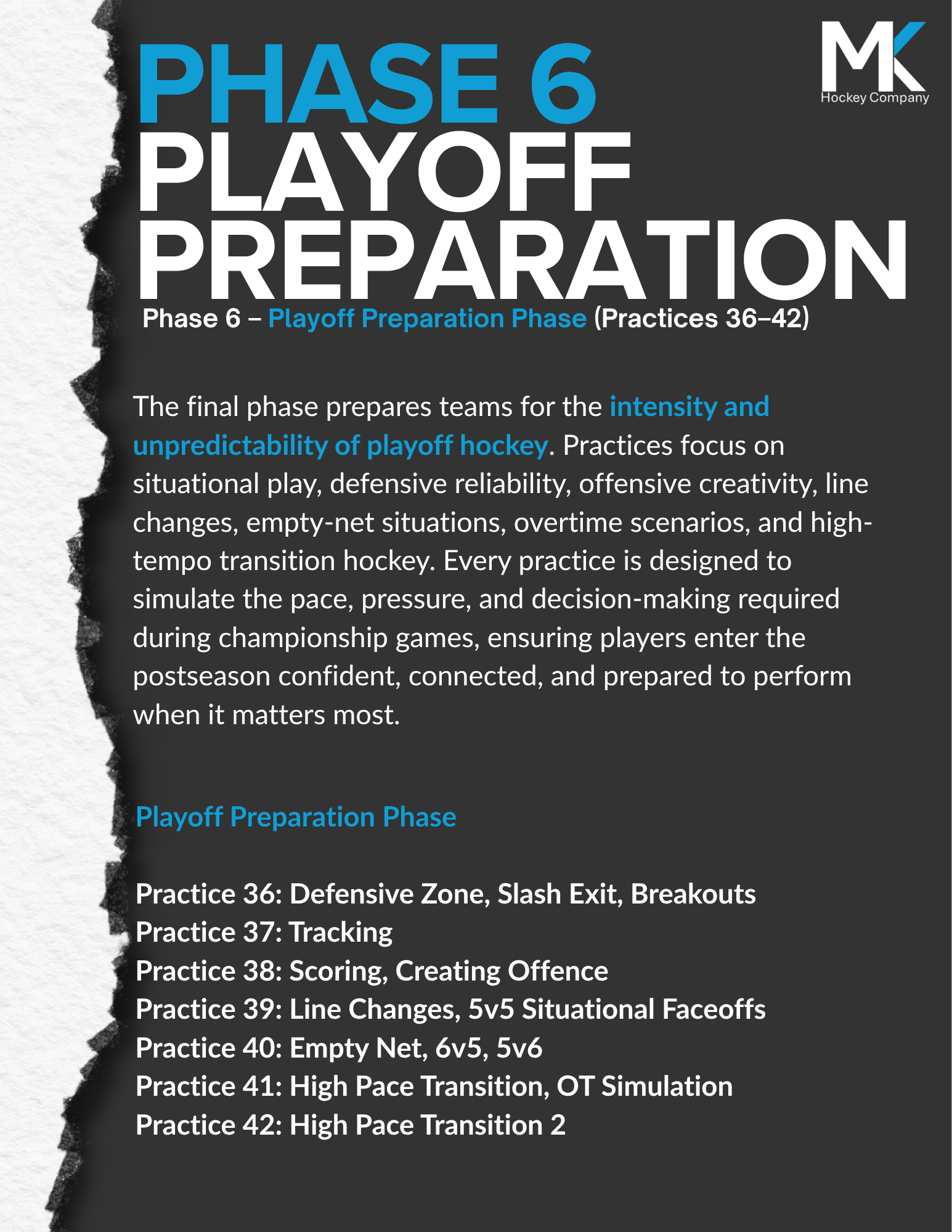
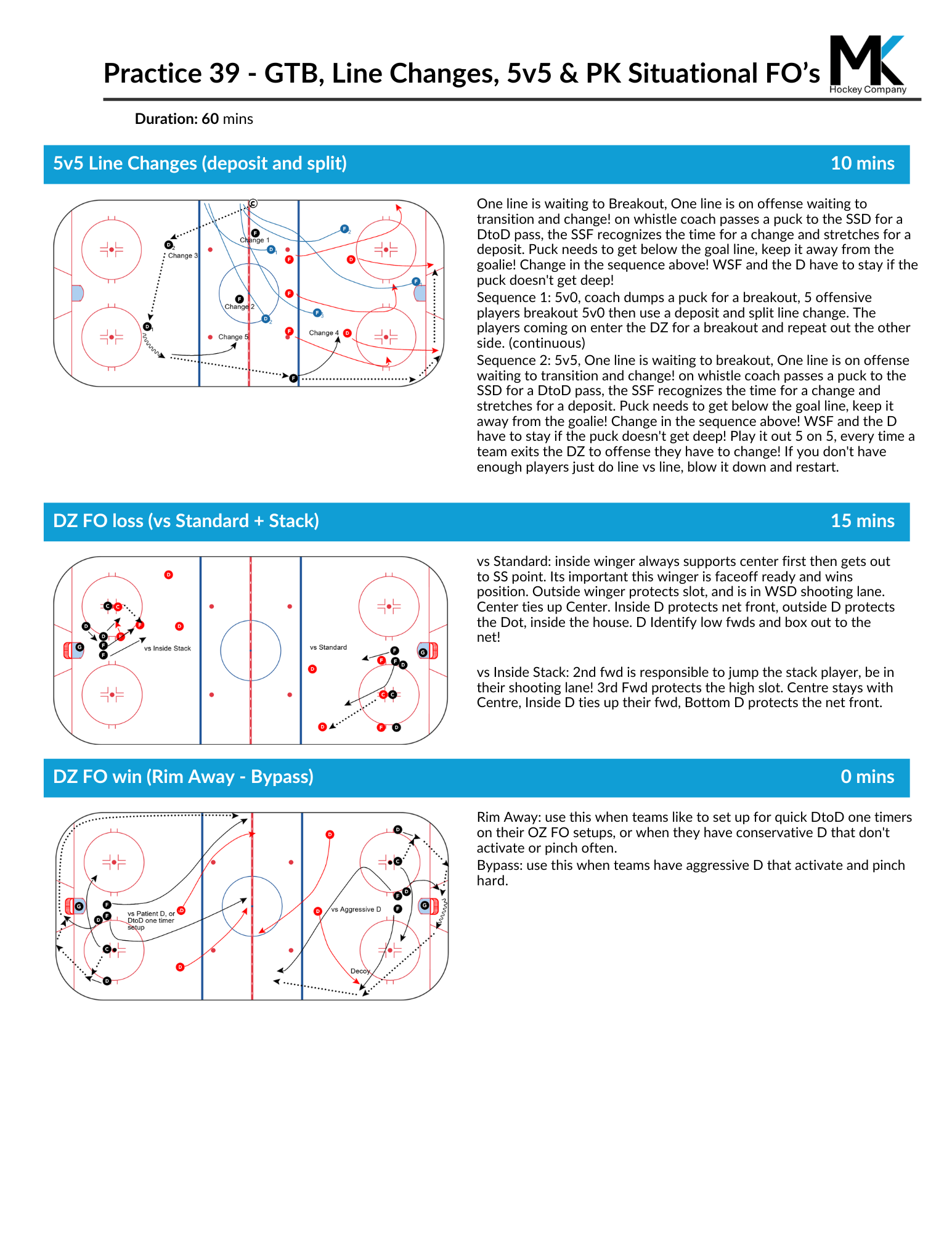
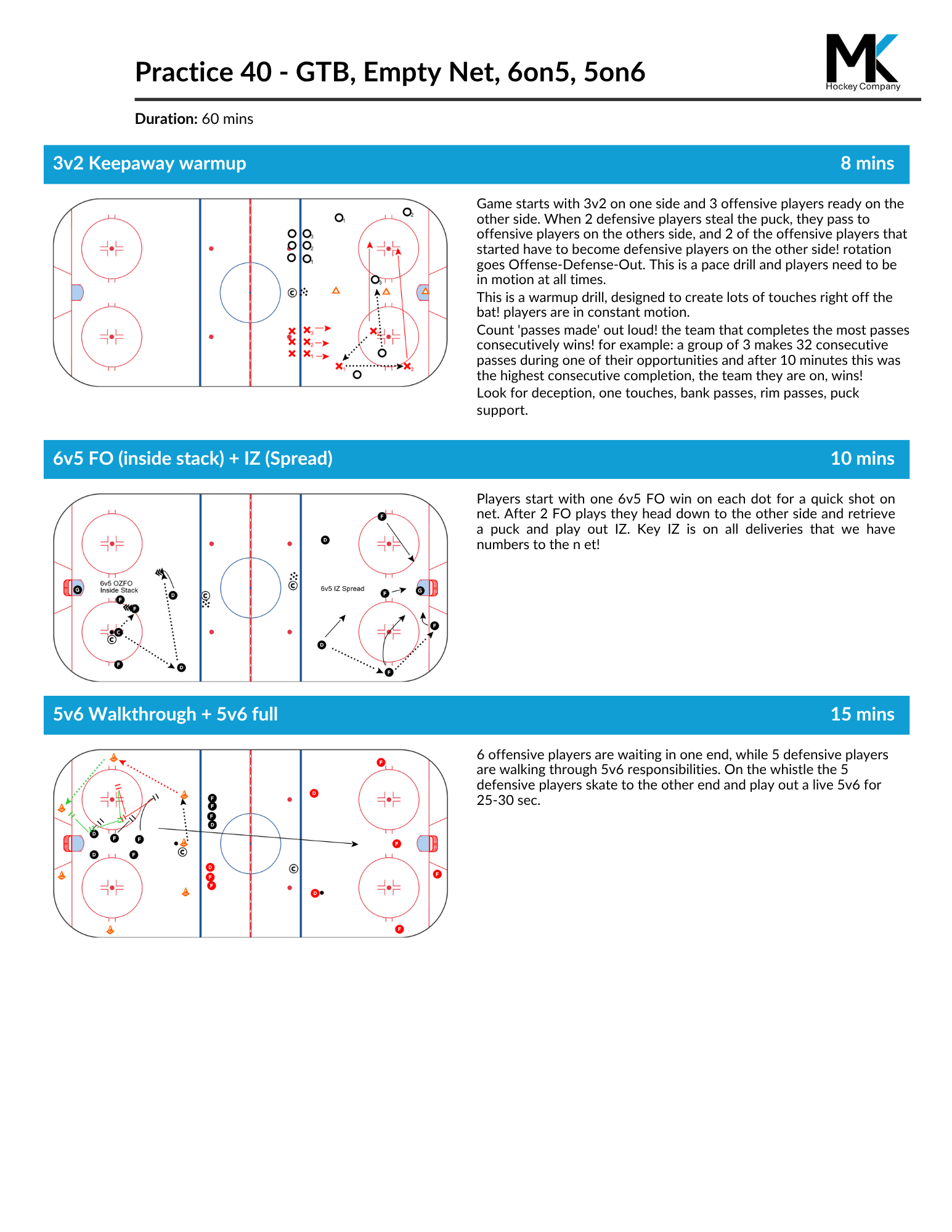
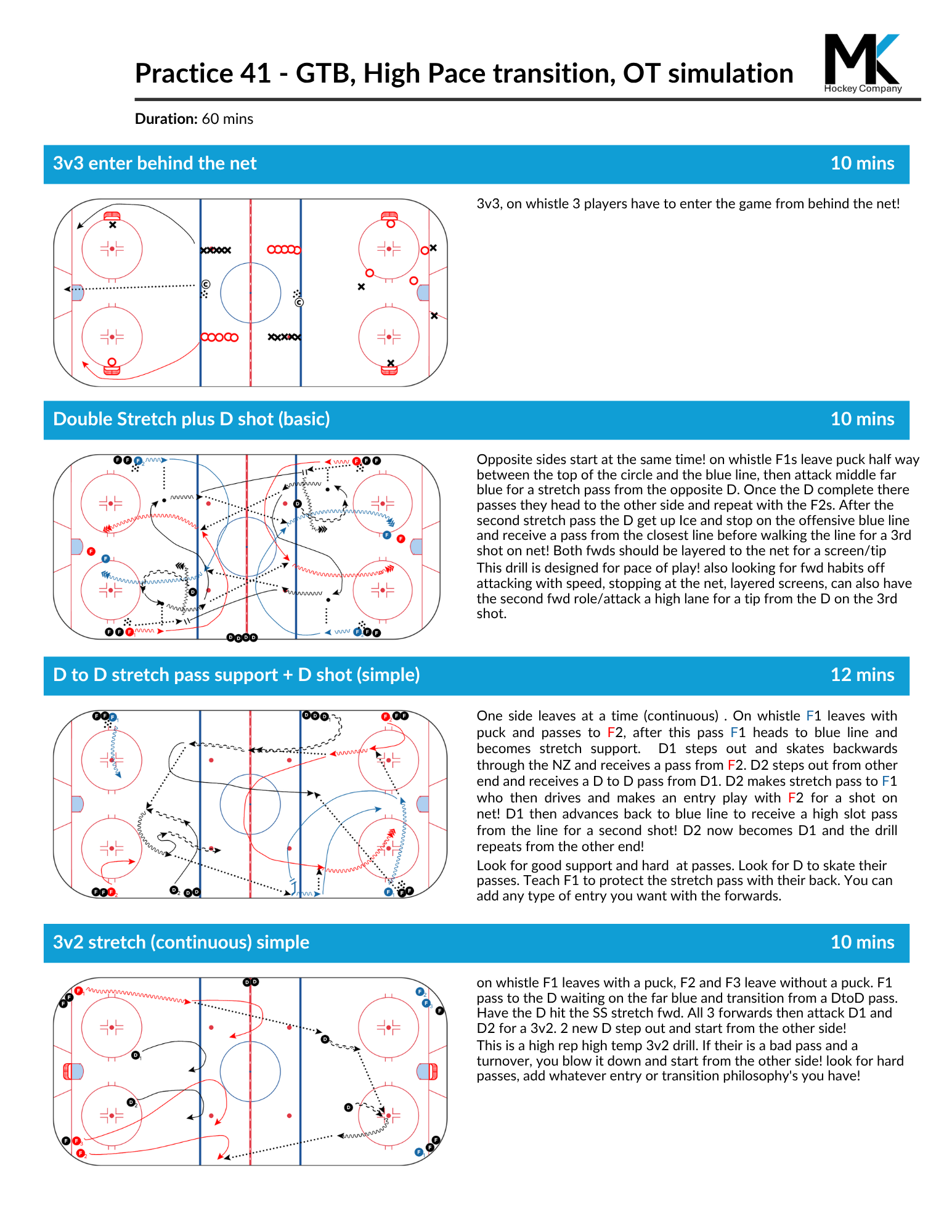
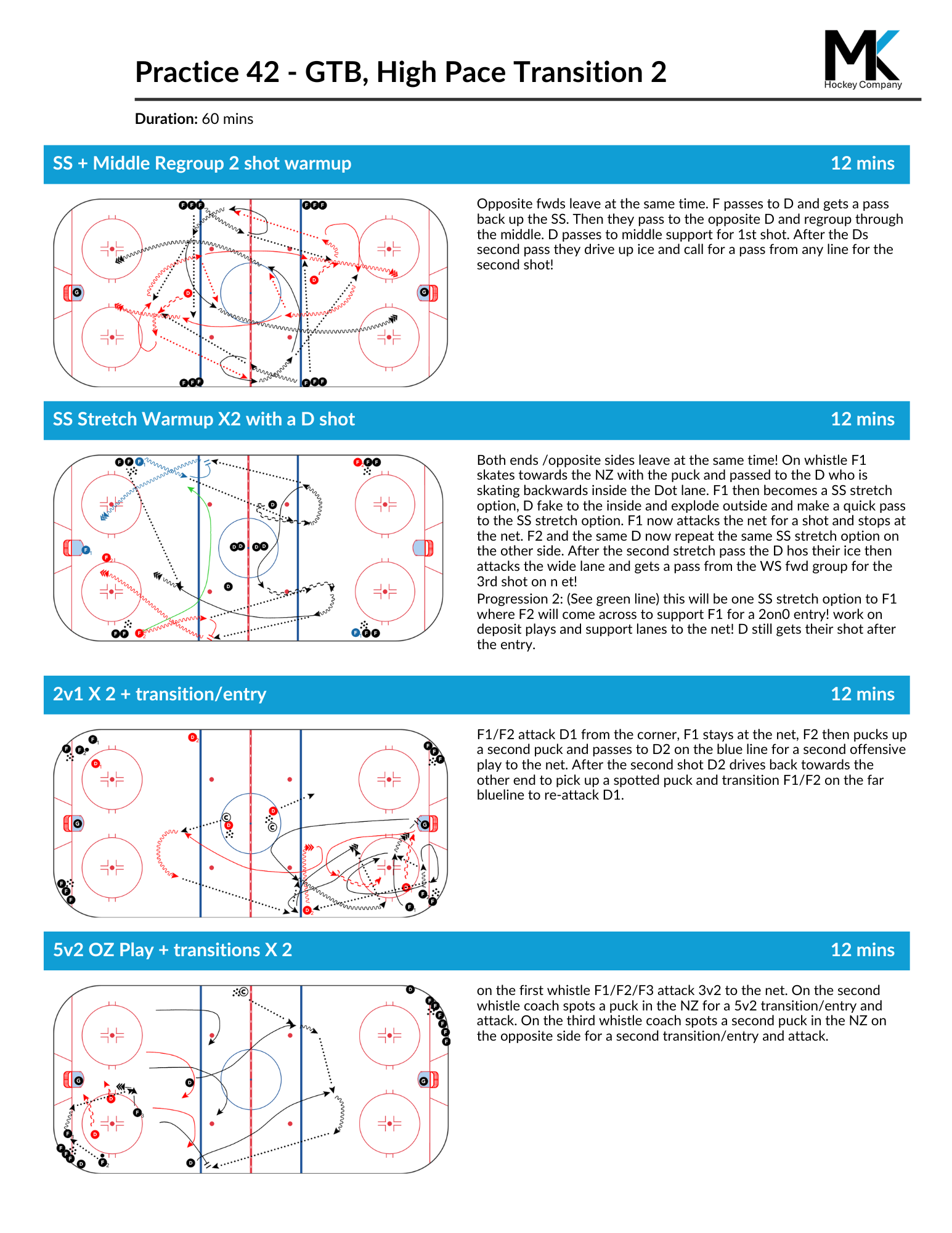
The final phase prepares teams for the intensity and unpredictability of playoff hockey. Practices focus on situational play, defensive reliability, offensive creativity, line changes, empty-net situations, overtime scenarios, and high-tempo transition hockey. Every practice is designed to simulate the pace, pressure, and decision-making required during championship games, ensuring players enter the postseason confident, connected, and prepared to perform when it matters most.